



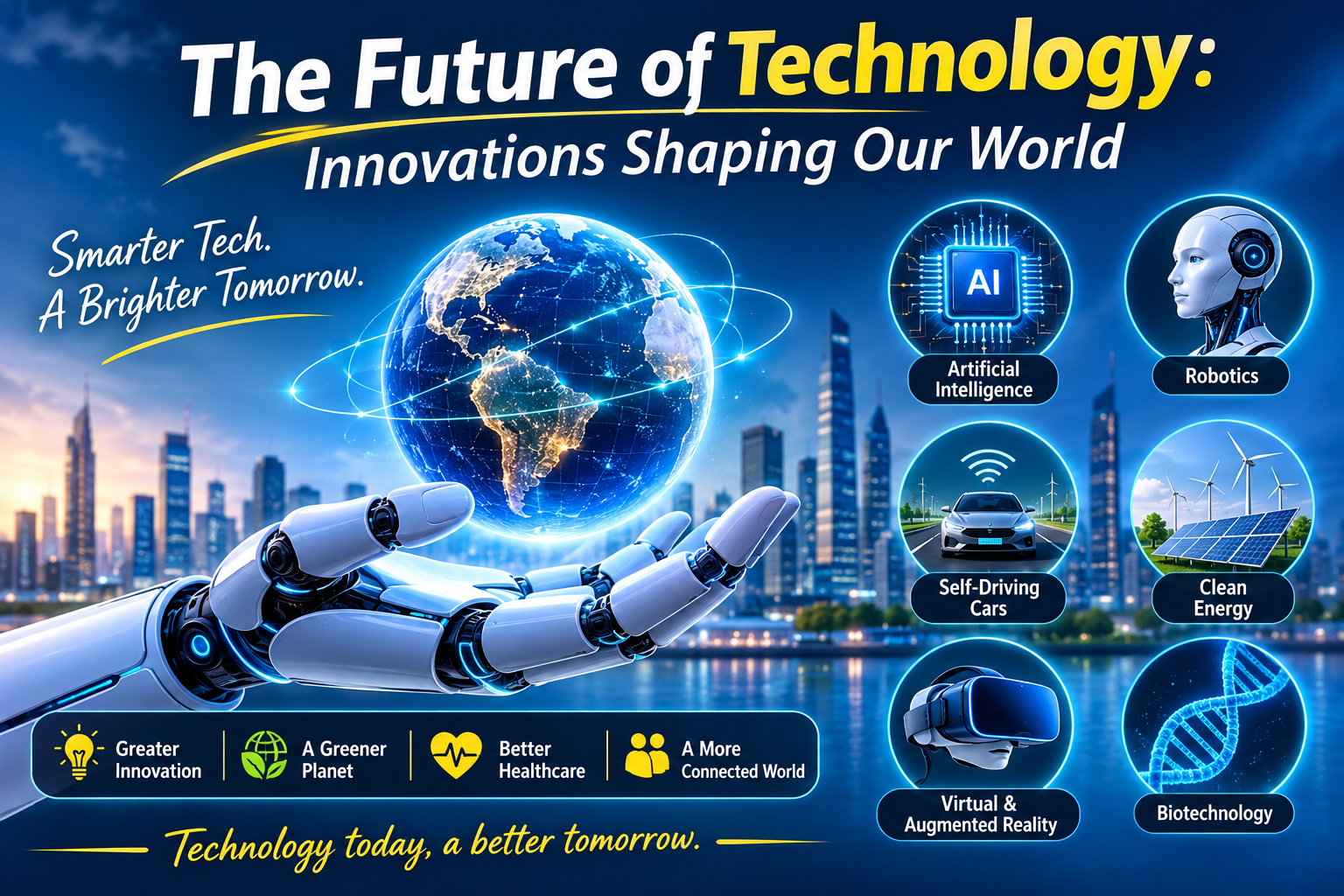
Technology is evolving faster than ever, transforming the way we live, work, communicate, and interact with the world. From Artificial Intelligence (AI) and robotics to smart devices and advanced digital systems, technological innovations are creating opportunities that were once considered impossible. As we move further into the digital age, the future of technology promises to bring significant changes to almost every industry.
The future of technology is not just about developing advanced machines or faster computers; it is about making everyday life more efficient, improving productivity, solving global challenges, and creating a smarter and more connected world. Understanding these emerging innovations can help individuals and businesses prepare for the opportunities and challenges ahead.
1. Artificial Intelligence: Transforming Everyday Life
Artificial Intelligence is one of the most influential technological innovations shaping our future. AI enables machines and computer systems to perform tasks that traditionally require human intelligence, including learning, problem-solving, language understanding, and decision-making.
Today, AI is being used in healthcare, education, business, customer service, and transportation. AI-powered tools can help doctors analyze medical information, assist students with learning, and enable businesses to understand customer needs.
In the coming years, AI is expected to become even more integrated into everyday activities. Intelligent assistants, automated business processes, and personalized digital experiences will continue to transform how people interact with technology.
2. Robotics and Automation: The Future of Work
Robotics and automation are changing industries by improving efficiency, accuracy, and productivity. Modern robots can perform repetitive and complex tasks in manufacturing, healthcare, agriculture, and logistics.
Businesses are increasingly adopting automation to reduce manual workloads and improve operational performance. In healthcare, robotic technologies can assist medical professionals with certain procedures, while agricultural robots can support farming activities.
However, automation also creates a growing need for new skills. Future workers will benefit from learning digital technologies, programming, problem-solving, and other skills that complement automated systems.
3. Internet of Things (IoT): Creating a Connected World

The Internet of Things (IoT) refers to physical devices connected to the internet that collect and exchange information. These devices include smart appliances, wearable technology, security systems, and industrial equipment.
Smart homes allow people to control lighting, temperature, and security systems through connected devices. Similarly, smart cities use IoT technology to improve traffic management, energy consumption, and public services.
As IoT continues to develop, connected technology will make everyday activities more convenient. However, protecting personal information and securing connected devices will remain important priorities.
4. 5G and the Development of 6G Technology
Fast and reliable internet connectivity plays an essential role in technological development. 5G technology has introduced faster communication speeds, reduced latency, and improved network capacity.
These improvements support innovations such as autonomous systems, smart infrastructure, remote healthcare, and advanced virtual experiences.
Meanwhile, researchers are exploring 6G technology, which aims to deliver even more advanced wireless communication capabilities. Although widespread 6G adoption is still in development, it could open new possibilities for real-time communication and connected digital environments.
5. Virtual Reality and Augmented Reality
Virtual Reality (VR) and Augmented Reality (AR) are changing how people experience digital content.
Virtual Reality creates immersive digital environments, while Augmented Reality adds digital elements to the real world. Both technologies have applications in education, gaming, healthcare, engineering, and professional training.
For example, students can explore virtual learning environments, while professionals can use AR tools to understand complex designs and technical processes.
In the future, these technologies may create more interactive and realistic digital experiences.
6. Blockchain and Digital Security
Blockchain technology is another important innovation influencing the future of digital systems. It is a distributed digital record system that stores information across multiple computers, making records difficult to alter without detection.
Blockchain has applications beyond cryptocurrencies. Industries can use it for supply chain management, digital identity verification, secure recordkeeping, and financial transactions.
As digital activities increase, blockchain and other cybersecurity technologies may help organizations improve transparency, data integrity, and trust in digital services.
7. Green Technology and Sustainable Innovation
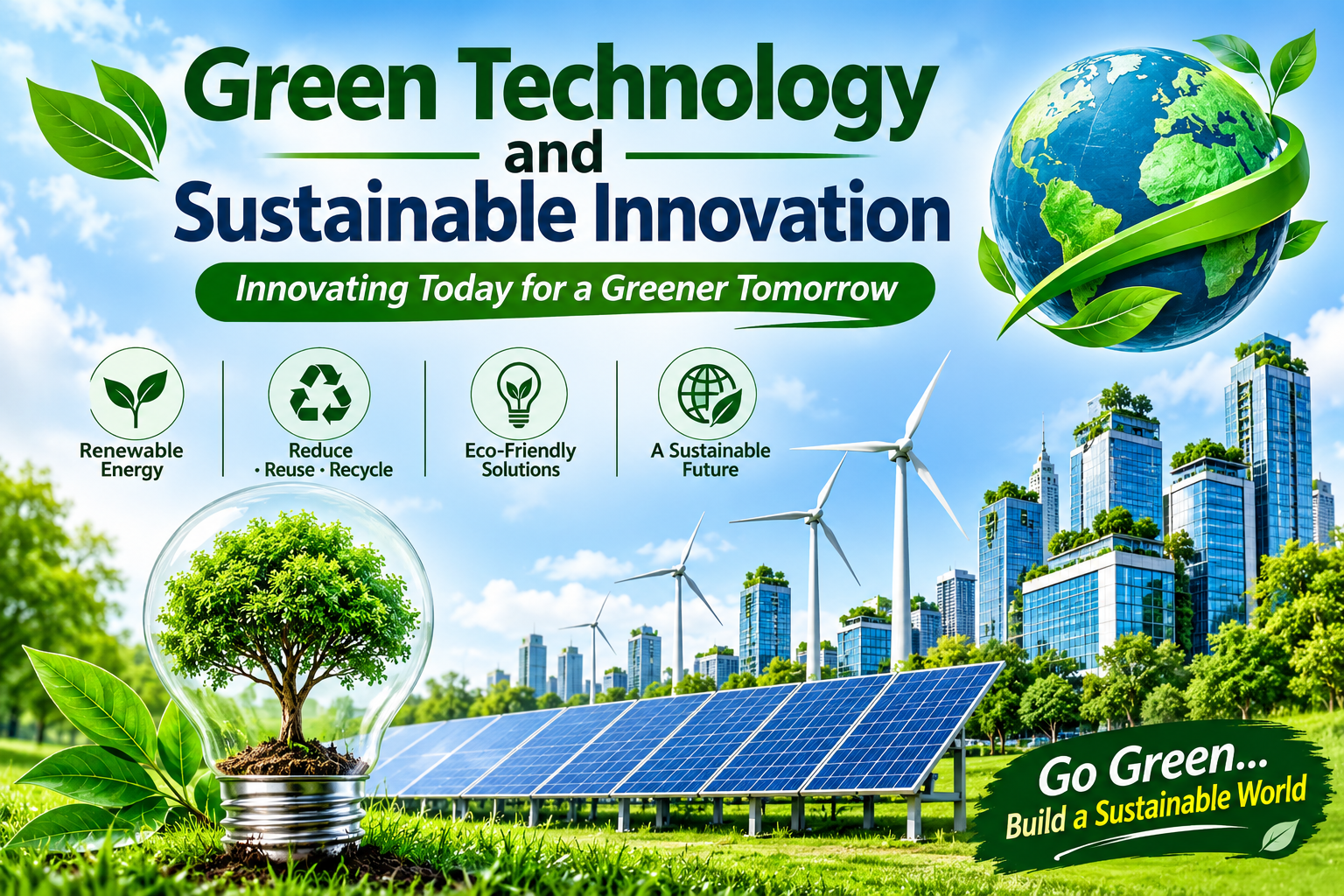
Technology is also playing a significant role in building a more sustainable future. Green technology focuses on developing solutions that reduce environmental impact and support efficient resource management.
Some important innovations include:
-
Renewable energy: Solar and wind power provide cleaner alternatives to traditional energy sources.
-
Electric vehicles: Electric transportation can help reduce dependence on fossil fuels.
-
Smart energy systems: Intelligent systems help monitor and manage electricity consumption.
-
Sustainable agriculture: Modern technologies can improve water efficiency and reduce resource waste.
-
Energy-efficient buildings: Smart systems can optimize heating, cooling, and lighting.
These innovations demonstrate how technology can support environmental protection while encouraging economic and social development.
8. The Future of Healthcare Technology
Healthcare is experiencing major changes through digital innovation. Artificial Intelligence, wearable devices, telemedicine, and advanced medical equipment are improving how healthcare services are delivered.
Wearable devices can monitor health-related information such as heart rate and physical activity. Telemedicine allows patients to communicate with healthcare professionals remotely, while AI-powered systems can assist medical experts in analyzing medical data.
In the future, technological advancements may support earlier disease detection, more personalized healthcare, and improved access to medical services.
9. Challenges and Risks of Future Technology
Although technological innovation offers many benefits, it also introduces challenges that society must address.
Some major concerns include:
-
Data privacy: Increasing digital activity creates greater responsibility to protect personal information.
-
Cybersecurity threats: Businesses and individuals must protect their systems against digital attacks.
-
Job transformation: Automation may change existing occupations and increase demand for new skills.
-
Digital inequality: Not everyone has equal access to modern technology and internet services.
-
Ethical concerns: AI systems must be developed and used responsibly to reduce bias and misuse.
Addressing these challenges will require cooperation between governments, technology companies, educational institutions, and individuals.
10. How to Prepare for the Future of Technology
Preparing for technological changes is important for students, professionals, entrepreneurs, and businesses.
Here are some practical ways to stay prepared:
-
Develop digital literacy and computer skills.
-
Learn about Artificial Intelligence and automation.
-
Improve problem-solving and critical-thinking abilities.
-
Stay informed about emerging technological trends.
-
Understand the importance of cybersecurity and online privacy.
-
Adapt to new tools and changing workplace requirements.
-
Focus on continuous learning and professional development.
People who remain curious, flexible, and willing to learn will be better prepared to take advantage of future technological opportunities.
Conclusion
The future of technology is full of possibilities. Artificial Intelligence, robotics, automation, blockchain, smart devices, and sustainable innovations are already transforming industries and everyday life.
As these technologies continue to develop, they will create new opportunities for education, healthcare, communication, business, and environmental protection. At the same time, society must address important concerns related to privacy, cybersecurity, employment, and ethical responsibility.
Ultimately, the future of technology will depend not only on how advanced our innovations become but also on how wisely we use them. By embracing innovation, developing essential skills, and encouraging responsible technological development, we can build a smarter, safer, and more sustainable world.



[…] climbing stairs. Some people experience pain at the beginning of exercise that changes as activity continues. Symptom patterns vary between […]
[…] Voice assistants can understand spoken commands, answer questions, set reminders, provide weather updates, and help users manage their schedules. AI-powered keyboards also suggest words, correct spelling, and improve typing experiences. […]
[…] If you know these examples, you can say that nanotechnology real life applications are not futuristic. Rather, they are quietly working in the background today. […]