



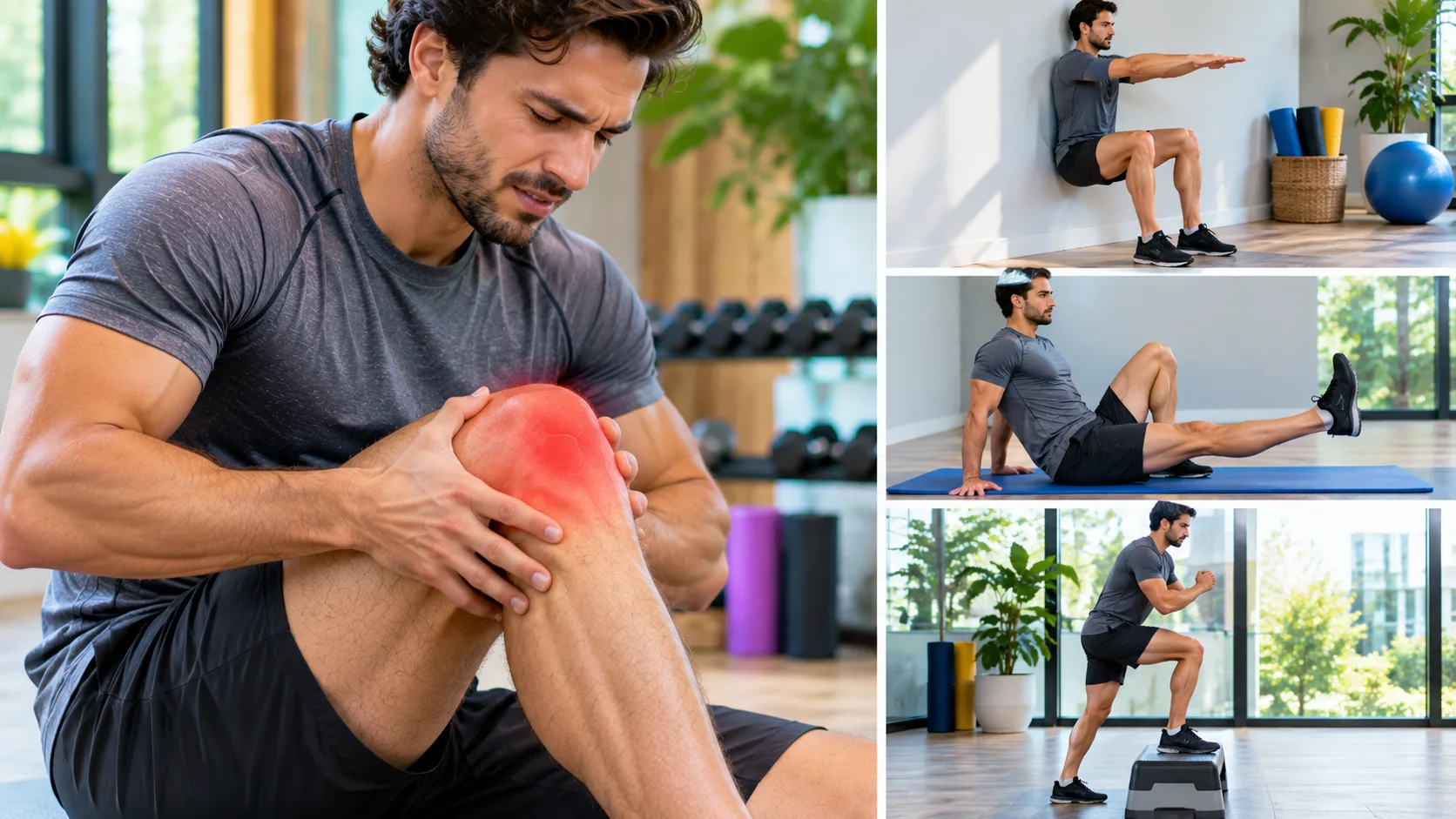
Pain just below the kneecap can make everyday movements uncomfortable, especially when climbing stairs, squatting, running, or jumping. This discomfort is sometimes associated with patellar tendonitis, also known as jumper’s knee. While resting completely may seem like the easiest solution, appropriate exercise can play an important role in recovery. Learning safe patellar tendonitis exercises can help improve strength, manage discomfort, and support gradual return to activity.
The patellar tendon connects the kneecap to the shinbone and helps transfer force during knee movement. Repeated jumping, running, and other demanding activities can place considerable stress on this structure. When the tendon becomes painful, choosing suitable exercises and managing physical activity are important.
Fortunately, rehabilitation often involves gradual strengthening rather than complicated workout routines. Isometric exercises, controlled squats, and other progressive movements may help improve tendon loading tolerance. This guide explains common exercises, proper form, benefits, recovery principles, and important precautions for managing patellar tendon pain.
What Is Patellar Tendonitis?
Patellar tendonitis is a commonly used term for pain involving the patellar tendon, located just below the kneecap. It is frequently associated with sports involving jumping, sprinting, and repeated knee loading. The condition is often called jumper’s knee. However, persistent cases are more accurately described as patellar tendinopathy.
The term tendonitis suggests inflammation, but long-lasting tendon pain does not always involve a primarily inflammatory process. Patellar tendinopathy can involve changes in tendon structure and its response to repeated loading. These changes may develop gradually. Understanding this distinction helps explain why rehabilitation often focuses on progressive exercise.
Patellar tendon pain can affect athletes and physically active individuals, but it is not limited to competitive sports. Symptoms may also occur after sudden increases in exercise intensity or unfamiliar physical demands. Not every painful knee has patellar tendinopathy. A proper diagnosis is important before beginning a targeted rehabilitation program.
What Causes Patellar Tendonitis?
Patellar tendon problems are commonly associated with repeated mechanical loading. Jumping, landing, sprinting, and frequent changes in direction can place substantial demands on the tendon. Problems may develop when training demands increase faster than the tendon can tolerate. However, several individual factors influence susceptibility.
Sudden changes in exercise volume, intensity, or frequency may contribute to symptoms. For example, adding frequent jumping sessions without sufficient adaptation time can increase tendon loading. Muscle strength and movement demands may also influence how forces are distributed. No single factor explains every case of patellar tendon pain.
Other knee conditions can produce similar discomfort around the kneecap. Patellofemoral pain, tendon injuries, and certain growth-related conditions may need consideration, particularly in younger athletes. Medical history and examination findings help distinguish these problems. Appropriate exercise selection depends on identifying the likely source of pain.
Common Symptoms of Patellar Tendonitis
The most recognizable symptom is pain near the lower edge of the kneecap or along the patellar tendon. Discomfort may become noticeable during jumping, running, squatting, or climbing stairs. Some people experience pain at the beginning of exercise that changes as activity continues. Symptom patterns vary between individuals.
Tenderness over the affected tendon may also occur. The knee can feel uncomfortable during activities that require substantial quadriceps effort. Symptoms sometimes become more noticeable after demanding training sessions. However, swelling, locking, or significant instability may suggest other problems requiring evaluation.
Patellar tendon pain should not be diagnosed based only on location. Different knee conditions can create overlapping symptoms. Persistent discomfort, difficulty bearing weight, or repeated limitations during daily activities deserve professional assessment. An accurate diagnosis helps guide safe exercise and recovery decisions.
Why Exercise Is Important for Patellar Tendonitis
Appropriate exercise is a central component of rehabilitation for many people with patellar tendinopathy. Tendons respond to mechanical loading, and gradually increasing suitable resistance can help improve their capacity. The goal is to restore tolerance for normal activities. However, the amount and type of exercise must match current symptoms.
Complete inactivity is not always necessary for tendon recovery. In some situations, avoiding all loading for prolonged periods can reduce muscle strength and physical capacity. Instead, rehabilitation often involves modifying aggravating activities while maintaining manageable exercise. This approach helps balance recovery with continued movement.
Exercise benefits usually develop gradually rather than immediately. Some movements may provide temporary symptom relief, while others build strength over time. A physiotherapist can help determine suitable progression and monitor responses. The most effective program considers pain levels, physical demands, and individual recovery goals.
Best Patellar Tendonitis Exercises for Beginners
Beginners often start with exercises that allow controlled knee loading without excessive movement. Isometric quadriceps contractions, supported wall sits, and gentle leg strengthening may be considered. These movements can help introduce muscular effort while limiting complicated joint motion. Exercise selection should reflect comfort and clinical guidance.
A beginner routine should focus on manageable effort rather than maximum resistance. Start with a small number of controlled repetitions or brief holds. Monitor symptoms during the exercise and later in the day. A movement that consistently increases pain may need modification.
Not everyone with patellar tendon pain should begin with the same exercise. Individuals with severe symptoms, recent injuries, or uncertain diagnoses may need assessment first. A qualified physiotherapist can adjust exercise difficulty according to tolerance. Gradual progression is more useful than attempting advanced strengthening immediately.
Isometric Quadriceps Exercises for Knee Support
Isometric exercises involve producing muscular tension without substantial joint movement. They are often used during early rehabilitation because the load can be adjusted. For patellar tendinopathy, isometric quadriceps exercises may provide a manageable starting point. However, their ability to produce immediate pain relief varies between individuals.
A simple quadriceps-setting exercise can be performed while sitting with the leg supported. Gently tighten the muscles at the front of the thigh without forcing the knee into a painful position. Maintain the contraction briefly while breathing normally. Relax before repeating.
The contraction should feel controlled rather than excessively forceful. Avoid pressing through sharp pain or holding your breath. As tolerance improves, more demanding isometric exercises may become appropriate. The purpose is to introduce safe muscular loading, not guarantee immediate elimination of tendon discomfort.
Wall Sits for Patellar Tendon Strength
Wall sits are a common isometric exercise that challenges the quadriceps. Because the quadriceps transfer force through the patellar tendon, the movement can provide controlled tendon loading. However, deeper knee bends generally increase the demand. A modified position may be more appropriate during early rehabilitation.
Stand with your back against a stable wall and your feet placed comfortably in front. Slowly bend your knees to a shallow, manageable position. Keep your feet stable and maintain natural breathing. Avoid lowering into a deep squat if that increases discomfort.
Hold the position briefly before returning to standing. The depth and duration should reflect your current tolerance rather than a fixed target. Stop if the exercise produces sharp or worsening pain. A physiotherapist may recommend alternative angles or loading strategies when wall sits are uncomfortable.
Straight Leg Raises for Quadriceps Control
Straight leg raises help strengthen the quadriceps while keeping the knee relatively straight. They can be useful when more demanding knee movements are uncomfortable. However, they generally provide less direct patellar tendon loading than heavier squat-based exercises. They are best considered one possible component of rehabilitation.
Lie on your back with one knee bent and the other leg extended comfortably. Gently tighten the thigh muscles of the straight leg. Slowly lift the leg a small distance while maintaining control. Lower it gradually without allowing the movement to become jerky.
Begin with manageable repetitions and avoid lifting the leg excessively high. Keep your breathing natural throughout the exercise. If the movement causes discomfort around the hip or knee, stop and seek guidance. Progressive rehabilitation may eventually require more demanding exercises as tolerance improves.
Spanish Squats for Patellar Tendinopathy
Spanish squats are commonly used in some patellar tendinopathy rehabilitation programs. They involve performing a squat with appropriate support behind the knees, allowing substantial quadriceps effort. The exercise may be performed isometrically or through controlled movement. However, it is not suitable for every stage of recovery.
Because Spanish squats require a secure resistance setup, they are best learned with qualified supervision. Incorrect equipment placement or unstable support can create unnecessary risks. A physiotherapist can determine appropriate positioning and knee bend. The exercise should not be attempted using an improvised or unreliable anchor.
The main benefit is the opportunity to challenge the quadriceps and patellar tendon in a controlled manner. Some people tolerate this variation comfortably, while others require simpler exercises. Pain response should guide modifications. There is no requirement to perform Spanish squats if alternative strengthening movements are more suitable.
Partial Squats for Controlled Knee Loading
Partial squats provide a practical way to introduce knee bending with manageable resistance. They train the quadriceps, glutes, and other lower-body muscles. The depth can be adjusted according to symptoms. This flexibility makes them useful within some progressive strengthening programs.
Stand with your feet comfortably apart and use a stable support if needed. Slowly move your hips backward while bending your knees slightly. Lower only as far as you can maintain comfortable control. Return to standing without bouncing or rushing.
Avoid forcing a deep squat when the tendon is sensitive. Start with a smaller range and gradually increase difficulty when appropriate. The exercise should not produce a significant worsening of symptoms afterward. Professional guidance can help determine suitable progression.
Step-Ups for Knee Strength and Stability
Step-ups involve lifting the body onto a stable raised surface using one leg. The movement challenges the quadriceps, glutes, and other muscles involved in everyday mobility. It can help prepare the knee for activities such as climbing stairs. However, step height affects exercise difficulty.
Begin with a low, stable step and stand close to a secure support. Place one foot on the step and slowly transfer your weight onto that leg. Rise with controlled movement and return carefully to the starting position. Avoid pushing through sharp knee pain.
Progression may involve changing step height or adding resistance when appropriate. However, increasing difficulty too quickly can aggravate tendon symptoms. Monitor how the knee responds during and after exercise. A modified exercise may be preferable if step-ups repeatedly cause discomfort.
Eccentric Squats for Patellar Tendon Rehabilitation
Eccentric exercise involves controlling a muscle while it lengthens under tension. Eccentric squats have historically been used in patellar tendinopathy rehabilitation. They can provide substantial tendon loading when performed appropriately. However, modern rehabilitation programs may also use heavy slow resistance and other progressive strengthening approaches.
During an eccentric squat, the lowering phase is performed slowly and deliberately. The return movement may be adjusted according to the rehabilitation program. Exercise depth and resistance influence tendon loading. These details should be individualized rather than copied from a demanding athletic routine.
Eccentric exercises are not necessarily appropriate during every stage of recovery. Excessive loading may worsen symptoms, particularly when introduced too early. A physiotherapist can determine when this approach is suitable. Gradual progression and symptom monitoring remain more important than following one specific exercise method.
Heavy Slow Resistance Training for Tendon Recovery
Heavy slow resistance training is an approach used in some rehabilitation programs for patellar tendinopathy. It involves performing strengthening movements at a controlled pace while gradually increasing resistance. Exercises may include squats, leg presses, and other suitable lower-body movements. The program is adjusted according to the individual’s capacity.
The purpose is to progressively challenge the quadriceps and patellar tendon. As strength and loading tolerance improve, resistance can be increased carefully. This process usually requires time and consistency. Sudden increases may exceed what the tendon can currently tolerate.
Heavy slow resistance should not be confused with lifting the heaviest possible weight. Appropriate loading depends on symptoms, technique, and rehabilitation stage. Professional supervision is especially useful when returning to demanding sports. The goal is sustainable tendon capacity rather than short-term performance.
Glute Strengthening Exercises for Knee Support
The gluteal muscles contribute to hip movement and lower-body control during walking, running, and jumping. Strengthening these muscles can complement rehabilitation for patellar tendon pain. However, weak glutes are not necessarily the cause of every knee problem. Treatment should address individual strength and movement needs.
Glute bridges are a simple exercise that can be performed without equipment. Lie on your back with your knees bent and feet resting on the floor. Slowly lift your hips while keeping your movement controlled. Lower gently and avoid forcing your lower back into an exaggerated arch.
Side-lying hip exercises may also strengthen muscles around the pelvis. These movements can support general lower-body conditioning without requiring repeated jumping. However, they do not replace progressive quadriceps and tendon loading. A balanced rehabilitation program may include both hip and knee strengthening.
Calf Raises and Lower-Body Strength
Calf raises strengthen muscles involved in ankle movement, walking, and jumping. Although they do not directly target the patellar tendon as strongly as quadriceps exercises, they can complement lower-body rehabilitation. The calf muscles contribute to force production during many athletic activities. Balanced strengthening helps prepare the legs for different physical demands.
Begin by standing near a stable support with your feet comfortably apart. Slowly raise your heels from the floor while maintaining balance. Lower them in a controlled manner. Avoid bouncing or using sudden movements.
As strength improves, resistance or exercise difficulty may be adjusted. However, calf raises should remain comfortable and should not worsen knee symptoms. They are supplementary exercises rather than a complete treatment for patellar tendinopathy. A rehabilitation program should still address the specific demands placed on the knee.
How to Warm Up Before Patellar Tendonitis Exercises
A gentle warm-up can prepare your muscles and joints for strengthening activities. Low-intensity walking or easy stationary cycling may be useful when comfortable. Begin at a manageable pace and observe how your knee responds. The warm-up should not significantly increase pain.
After light activity, practice controlled movements that resemble your planned exercises. Gentle knee bends or low-resistance leg movements may help assess your current tolerance. Avoid sudden jumping or demanding squats before your body is prepared. A gradual approach allows you to adjust the session.
Warm-ups do not guarantee that injuries or pain flare-ups will be prevented. Their purpose is to prepare for movement and identify potential discomfort. If your knee remains unusually painful, the planned workout may need modification. Professional guidance can help establish appropriate training limits.
How Often Should You Do Patellar Tendonitis Exercises?
Exercise frequency depends on symptom severity, training history, and the type of movement. Gentle isometric exercises may sometimes be performed more frequently than demanding resistance sessions. Heavier strengthening usually requires recovery between workouts. The appropriate schedule varies between individuals.
Some rehabilitation programs use several strengthening sessions per week with carefully managed resistance. However, following a fixed routine without considering pain response can be unhelpful. Tendon rehabilitation often requires adjustments as symptoms change. Consistent but manageable loading is generally preferable to sudden increases.
Monitor discomfort during exercise and how the knee feels afterward and the following day. A noticeable increase in symptoms may suggest that the current workload is excessive. Reduce the demand and seek professional guidance when necessary. Progression should reflect recovery rather than an arbitrary deadline.
Should You Stretch With Patellar Tendonitis?
Stretching may improve comfort or mobility when specific muscles feel restricted. However, stretching alone is not a primary treatment for patellar tendinopathy. The main rehabilitation focus usually involves progressive loading and strength development. Not every person with patellar tendon pain needs additional flexibility.
Gentle quadriceps or calf stretches may be appropriate when they do not aggravate symptoms. Avoid forcing deep knee bending or pulling aggressively on the affected leg. Stretching should remain comfortable and controlled. Stop if pain develops around the patellar tendon.
Some people experience increased discomfort during intense quadriceps stretching because it changes tension around the knee. This is why flexibility work should be individualized. A physiotherapist can identify whether stretching is likely to help. More flexibility is not automatically better for tendon recovery.
How to Manage Pain During Rehabilitation
Pain monitoring is an important part of patellar tendon rehabilitation. Some supervised programs allow manageable discomfort during controlled loading, but the acceptable amount varies. Pain should not be treated as something to overcome through force. The response after exercise is particularly important.
If an exercise produces sharp pain, significant instability, or rapidly increasing discomfort, stop immediately. Symptoms that remain noticeably worse the following day may indicate excessive loading. Exercise intensity, range, or frequency may need adjustment. A qualified clinician can help establish individualized limits.
Avoid using pain medication simply to push through demanding exercises without medical advice. Reducing pain does not necessarily mean the tendon is ready for greater loading. Rehabilitation should progress according to function and symptom response. Patience is important when returning to previous activity levels.
When Can You Return to Running and Jumping?
Returning to running or jumping requires more than being able to walk without pain. These activities place greater demands on the patellar tendon. Strength, movement control, and tolerance for progressive loading should be considered. The appropriate timing varies considerably.
Rehabilitation may gradually progress from controlled strengthening to more demanding functional movements. Depending on the individual, this can include carefully supervised jumping and landing exercises. Each stage should be introduced when the previous level is well tolerated. Returning too quickly may aggravate symptoms.
Athletes should discuss return-to-sport decisions with a physiotherapist or sports medicine professional. Medical guidance may include strength assessments and sport-specific movement testing. There is no universal number of weeks that guarantees recovery. Functional readiness is more important than following a fixed calendar.
Common Patellar Tendonitis Exercise Mistakes
One common mistake is attempting demanding exercises before the knee can tolerate them. Deep squats, repeated jumping, and heavy resistance may aggravate symptoms when introduced too quickly. Gradual progression allows loading capacity to develop. Exercise difficulty should reflect current function rather than previous athletic performance.
Another mistake is relying entirely on rest without considering appropriate rehabilitation. Although temporary activity modification may help manage symptoms, prolonged avoidance of all strengthening can reduce physical capacity. Tendons often benefit from carefully managed loading. The challenge is choosing the correct amount.
Ignoring symptoms after exercise is another concern. A workout may feel manageable initially but lead to significantly greater discomfort later. Monitoring the following day’s response helps identify excessive loading. Persistent pain should be assessed rather than repeatedly treated with the same unsuccessful routine.
When Should You See a Doctor for Knee Pain?
Medical assessment is appropriate when pain below the kneecap persists, worsens, or interferes with ordinary activities. Patellar tendinopathy is only one possible explanation. Other knee conditions may require different treatment. A healthcare professional can assess symptoms and recommend suitable management.
Seek prompt evaluation if knee pain follows a significant injury or occurs with substantial swelling, redness, fever, or difficulty bearing weight. A sudden inability to actively straighten the knee after an injury may indicate serious tendon damage. These symptoms should not be managed through home exercises alone.
A physiotherapist or sports medicine professional may provide an individualized rehabilitation plan. Treatment can involve progressive strengthening, activity adjustments, and evaluation of training demands. Further investigation may be necessary when symptoms remain unexplained. Accurate diagnosis helps ensure that exercises address the appropriate condition.
Conclusion
Patellar tendonitis exercises can play an important role in managing symptoms and improving knee loading tolerance. Isometric holds, controlled squats, and progressive resistance training are commonly used in rehabilitation. However, exercise selection depends on the diagnosis and severity of symptoms. There is no single movement that guarantees recovery.
Safe rehabilitation involves gradual strengthening, appropriate recovery, and careful monitoring of discomfort. Beginners may start with manageable exercises before progressing toward more demanding movements. Stretching and general lower-body conditioning can complement strengthening when appropriate. Avoid increasing intensity simply because an exercise begins to feel easier.
Persistent patellar tendon pain deserves professional assessment, particularly when it affects walking, sports, or daily activities. A qualified healthcare professional can help establish suitable exercise progression and return-to-activity goals. Recovery may require patience and consistent adjustments. The most effective approach focuses on sustainable improvement rather than rushing back to demanding exercise.
Frequently Asked Questions
What Is the Best Exercise for Patellar Tendonitis?
Progressive quadriceps strengthening is commonly recommended for patellar tendinopathy. Isometric holds, controlled squats, and heavy slow resistance may be useful at different rehabilitation stages under appropriate guidance.
Can You Exercise With Patellar Tendonitis?
Yes, many people can continue suitable exercise while managing patellar tendinopathy. However, activities should be adjusted according to symptoms, and worsening pain or instability requires assessment.
Are Squats Good for Patellar Tendonitis?
Controlled squats can support patellar tendon rehabilitation when the knee tolerates the movement. Exercise depth, resistance, and frequency should be adjusted to avoid excessive loading.
How Long Does Patellar Tendonitis Take to Heal?
Recovery varies depending on symptom duration, severity, activity demands, and rehabilitation progress. Persistent patellar tendinopathy may require several months of progressive management rather than a short period of rest.
Should You Rest or Stretch Patellar Tendonitis?
Temporary activity modification may help control symptoms, but progressive strengthening is often central to rehabilitation. Stretching may help selected individuals, although aggressive stretching can aggravate tendon discomfort.