



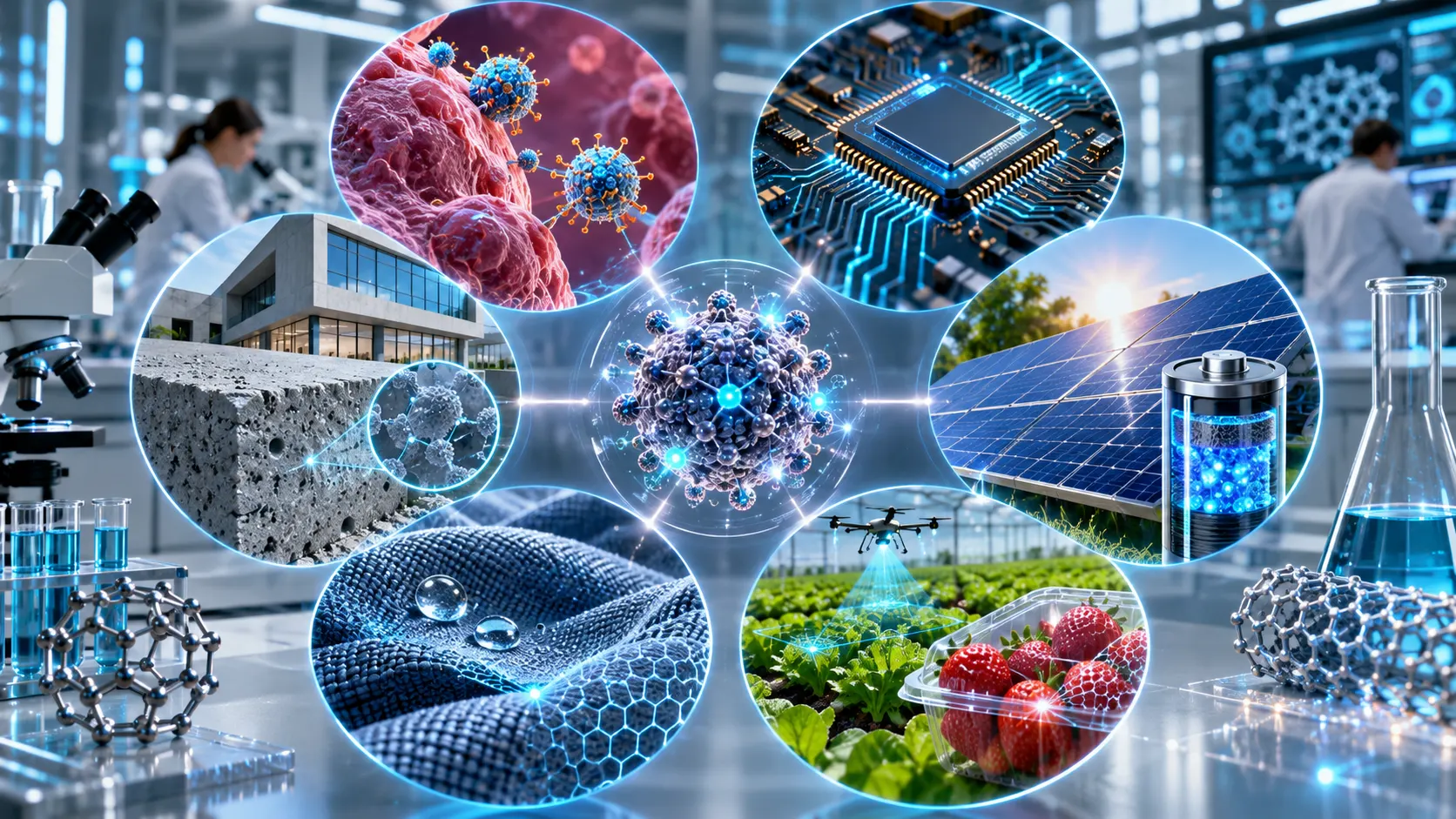
Many industries in society are benefiting from nanotechnology applications. These include the medical, construction sectors, and various others where nanotechnology has made its mark. In this article, you will explore what nanotechnology is, see real-life examples of its application, and what its growth signifies for the future.
What Are Nanotechnology Applications?
The practical uses of materials and devices engineered at the nanoscale between 1 and 100 nanometers are known as nanotechnology applications. Basically, nanotechnology is the study of extremely small things. It can be used in Chemistry, Biology, Physics, Medical science, and engineering.
Nanotechnology in Real Life
A laboratory is not necessary to find nanotechnology in real life because it is a part of our ordinary life
- Smartphones and laptops: Transistors are available in computer chips and their features are measured in nanometers
- Clothing: In some stain-resistant and odor-resistant fabrics, nanoscale coatings or silver particles are used that limit bacterial growth.
- Screens: In certain televisions, quantum dots and nanocrystals are used that produce purer colors.
- Glass: In self-cleaning windows, nano thin layers are used.
If you know these examples, you can say that nanotechnology real life applications are not futuristic. Rather, they are quietly working in the background today.
Key Applications In Nanotechnology By Industry
Before we dive into detail, this is a quick overview.
| Industry | Common Example | Main Benefit |
| Medicine | Nanoparticle drug carriers | Targeted treatment, fewer side effects |
| Electronics | Nano-scale transistors, quantum dots | Speed, efficiency, richer displays |
| Energy | Nano-structured battery and solar materials | Longer life, higher efficiency |
| Environment | Nanofiltration membranes | Clean water |
| Consumer goods | Mineral sunscreen, antimicrobial fabric | Better protection and durability |
| Construction and automotive | Nano-silica, carbon-based composites | Stronger and lighter materials |
Medicine Industry
The revolutionizing of nanotechnology in the field of medicine is amazing. Targeted drug delivery is the most promising application of nanotechnology.
Nanoparticles can transport medicine to cancer tumors to increase the drug’s effectiveness while minimizing side effects. To support the repair and regeneration of damaged tissues and organs, nanomaterials are used.
Electronics
Nanoelectronics refers to the use of nanotechnology in electronic computers. They often refer to transistors that are so small. There are some advantages of using nanotechnology in electronics, such as decreasing the weight and thickness of the screens and reducing the size of transistors used in integrated circuits.
Energy and Batteries
The major goal of nanotechnology applications is better energy storage. Companies that are making batteries are adding structured silicon and carbon to electrodes so that batteries can hold more charge and survive more cycles.
Environment and Water Treatment
Nanotechnology plays a key role in cleaning water because it is a global need. Harmful pollutants, such as NOx, SOx, CO, etc., are increasing. There are some limitations in the existing procedures that are controlling these contaminations. For detecting heavy metals in water, some nanomaterials act as sensors or catalysts that break down harmful chemicals into safer substances.
Consumer Products
In consumer products, nanotechnology applications are used. The use of titanium dioxide in sunscreens and cerium oxide nanoparticles in diesel for combustion improvement are examples of consumer products that are claimed to contain nanoparticles.
Construction and Automotive
Nanotechnology is widely used in construction materials, such as concrete, steel, wood, glass, and coatings. In improving fuel cells, nanotechnology is very important and is becoming a big business in the car industry.
Benefits of Nanotechnology
– Targeted medical treatment
– Higher efficiency in electronics
– Lighter, stronger materials that use fewer resources
– Better tools for water cleaning and pollution detection
Conclusion
The unusual behavior of very small materials is turned into practical gains, such as faster devices, smarter medicine, cleaner water, and stronger materials through nanotechnology applications.
The amazing growth of nanotechnology is evident nowadays and has the potential to become a fundamental technology in the near future. The positive impact of nanotechnology real life applications has been life-changing in the medical, food, and energy sectors.
Frequently Asked Questions
What are the applications for nanotechnology?
The main nanotechnology applications are in different industries, such as:
Energy
Medical
Electronics
Construction
Consumer goods
Environmental protection
And these examples include targeted drug delivery, faster computer chips, efficient batteries, water filters, and more.
What is the most common example of nanotechnology in real life?
The most common example is Mineral sunscreen. Other everyday life examples are computer chips, quantum dot screens, and stain-resistant clothing.
How is nanotechnology used in medicine?
Nanotechnology has a key role in the medicine industry and is used in drug delivery, imaging, and diagnostics. Nanoparticles can transport medicine to cancer tumors to increase the drug’s effectiveness while minimizing side effects.
Is nanotechnology considered safe or not?
The safety of nanotechnology depends on the size of the material and exposure. However, Many nano-enabled products are considered safe when tested and used properly.
Which industries use nanotechnology the most?
Mostly, nanotechnology is used by Electronics, healthcare, energy, and materials manufacturing industries.