




Maintaining a healthy lifestyle requires more than regular exercise or following a balanced diet. Fitness and nutrition work together to support overall wellness, improve energy levels, and promote a healthier life. While physical activity strengthens the body, proper nutrition provides the essential nutrients needed for energy, recovery, and daily activities. Combining these two important elements can help individuals develop healthy habits and achieve long-term wellness.
In today’s busy world, people often struggle to find time for exercise and healthy eating. However, making small and consistent lifestyle changes can create a positive difference. Understanding the connection between fitness and nutrition is the first step toward building a healthier and more active lifestyle.
1. Understanding the Importance of Fitness and Nutrition
Fitness and nutrition are two essential foundations of good health. They complement each other and contribute to the proper functioning of the body.
Physical fitness involves maintaining an active lifestyle through activities such as walking, cycling, swimming, stretching, and strength exercises. Regular physical activity supports heart health, strengthens muscles and bones, and improves flexibility.
Nutrition focuses on providing the body with essential nutrients through a variety of foods. A balanced diet supplies carbohydrates, proteins, healthy fats, vitamins, minerals, and water.
When combined, fitness and nutrition help support physical strength, mental well-being, and overall health.
2. The Role of a Balanced Diet in Overall Wellness
A balanced diet is an important part of maintaining a healthy lifestyle. The body needs different nutrients to function properly, and eating a variety of foods helps meet these nutritional requirements.
Here are some essential components of a healthy diet:
Protein
Protein supports muscle growth, tissue repair, and normal body functions. Good sources include eggs, fish, chicken, beans, lentils, milk, and yogurt.
Carbohydrates
Carbohydrates provide energy for daily activities and exercise. Whole grains, oats, brown rice, fruits, and vegetables are nutritious sources.
Healthy Fats
Healthy fats support brain function and help the body absorb certain vitamins. Nuts, seeds, olive oil, and avocados are good options.
Vitamins and Minerals
Vitamins and minerals support immunity, bone health, energy production, and many other important body functions. Fresh fruits, vegetables, dairy products, and whole foods provide a range of essential nutrients.
Water
Proper hydration is necessary for digestion, temperature regulation, and normal body functions. Drinking water regularly throughout the day supports overall health.
3. Benefits of Regular Physical Activity
Exercise is not only about improving physical appearance. It plays an important role in maintaining good health and improving quality of life.
Some major benefits of regular physical activity include:
-
Improved Heart Health: Regular exercise supports cardiovascular health and circulation.
-
Stronger Muscles and Bones: Physical activities help maintain muscle strength and bone health.
-
Better Mental Well-Being: Exercise can improve mood and help manage everyday stress.
-
Increased Energy: Staying active supports stamina and daily physical performance.
-
Improved Sleep Quality: Regular movement can contribute to healthier sleep patterns.
-
Better Flexibility and Balance: Activities such as yoga and stretching improve mobility and coordination.
Choosing enjoyable physical activities makes it easier to maintain an active routine.
4. How Fitness and Nutrition Work Together
Fitness and nutrition are most effective when treated as connected parts of a healthy lifestyle.
Exercise increases the body’s energy requirements, while nutritious food provides the energy and nutrients needed to support physical activity. For example, carbohydrates help fuel movement, protein supports muscle repair, and healthy fats contribute to normal body functions.
Similarly, eating nutritious meals without regular movement may not provide all the benefits associated with an active lifestyle.
The combination of balanced eating and consistent exercise supports:
-
Healthy body functions.
-
Muscle development and recovery.
-
Energy and physical performance.
-
Cardiovascular health.
-
Long-term physical and mental wellness.
The goal should be to create a sustainable routine rather than following temporary fitness trends.
5. Healthy Eating Habits for an Active Lifestyle
Developing healthy eating habits does not require complicated meal plans or expensive foods. Simple choices can make a meaningful difference.
Consider these practical habits:
-
Eat a Variety of Foods: Include fruits, vegetables, whole grains, and protein sources in your daily meals.
-
Avoid Skipping Meals: Maintain regular eating habits that support your energy needs.
-
Stay Hydrated: Drink enough water throughout the day, especially during physical activity.
-
Choose Whole Foods: Include minimally processed foods in your regular diet.
-
Practice Balanced Portions: Eat according to your hunger, activity level, and nutritional needs.
-
Limit Excessive Sugary Foods: Enjoy sweets occasionally while prioritizing nutritious everyday meals.
Consistency is more important than achieving perfection with every meal.
6. Creating an Effective Fitness Routine
A good fitness routine should include different types of physical activities to support overall health.

Cardiovascular Exercise
Walking, cycling, swimming, and dancing are examples of cardiovascular activities. They support heart health and improve endurance.
Strength Training
Strength-based activities help develop and maintain muscles and support bone health. Exercises can include bodyweight movements and appropriately supervised resistance training.
Flexibility Exercises
Stretching and yoga help improve flexibility, mobility, and body coordination.
Daily Movement
Simple activities such as taking the stairs, walking short distances, and enjoying outdoor activities can help reduce sedentary time.
A balanced routine should match individual abilities, interests, and fitness levels. Rest and recovery are also important parts of maintaining physical wellness.
7. The Connection Between Nutrition and Mental Health
Overall wellness includes both physical and mental health. Nutrition and physical activity can positively influence emotional well-being and everyday mood.
A nutritious diet provides nutrients that support normal brain function. Foods containing omega-3 fatty acids, B vitamins, iron, and other essential nutrients contribute to important processes in the body.
Similarly, regular exercise can help reduce stress, improve mood, and support better sleep.
Maintaining healthy eating habits, staying physically active, and getting sufficient rest can contribute to a healthier mind and body.
8. Common Fitness and Nutrition Mistakes to Avoid
Many people begin their wellness journey with unrealistic expectations. Avoiding common mistakes can make healthy habits easier to maintain.
Some mistakes include:
-
Following extreme or unnecessarily restrictive diets.
-
Exercising without allowing enough time for recovery.
-
Ignoring hydration and proper nutrition.
-
Comparing personal progress with other people.
-
Expecting immediate results from lifestyle changes.
-
Following fitness trends without considering individual needs.
-
Neglecting sleep and stress management.
A healthy lifestyle is a gradual process. Sustainable habits are more valuable than short-term solutions.
9. Practical Tips for Maintaining a Healthy Lifestyle
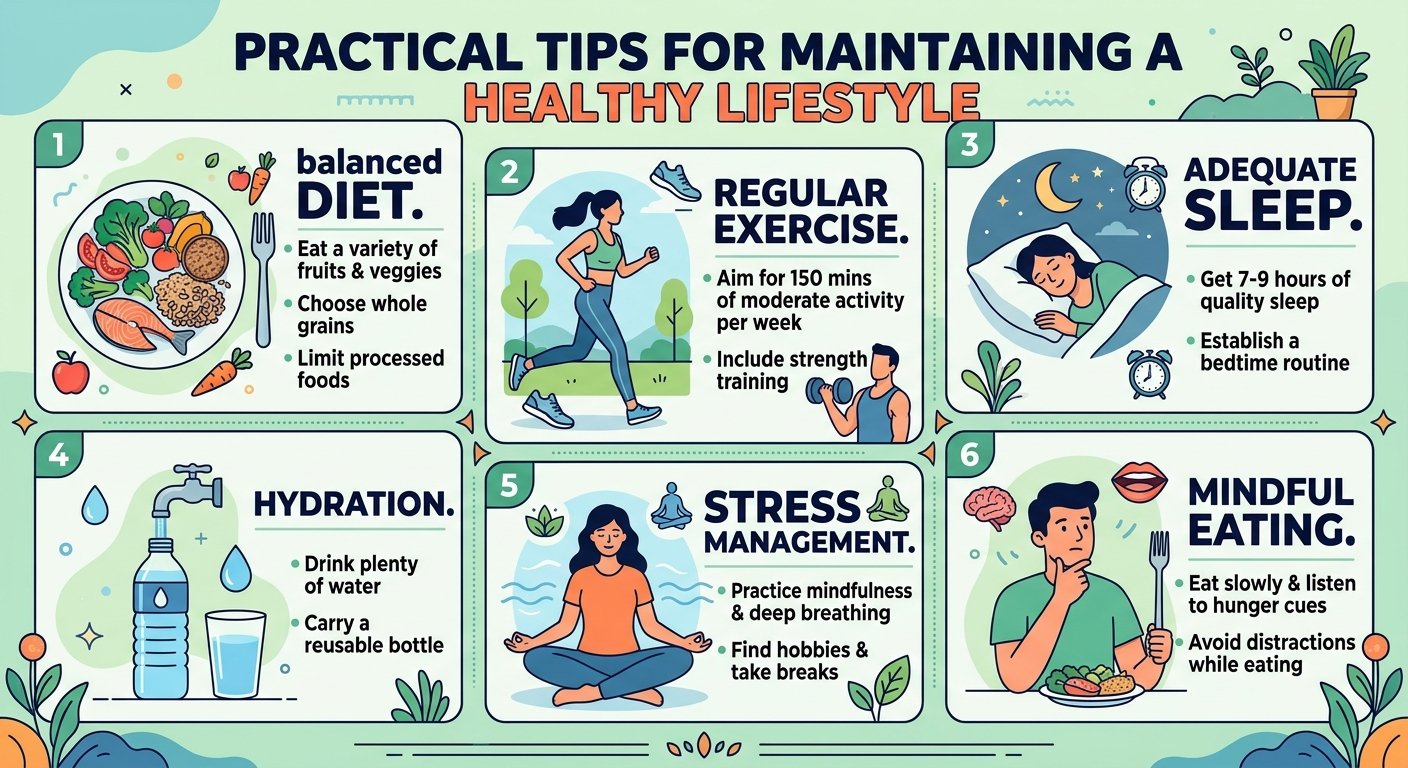
Building a healthy lifestyle becomes easier when daily habits are simple and realistic.
Here are some practical tips:
-
Start your day with a nutritious breakfast.
-
Include different fruits and vegetables in your meals.
-
Choose physical activities that you genuinely enjoy.
-
Maintain a regular sleep schedule.
-
Drink water throughout the day.
-
Take breaks from prolonged sitting.
-
Spend time outdoors whenever possible.
-
Set realistic health and fitness goals.
-
Make time for relaxation and recovery.
Remember that every positive step contributes to your overall wellness.
10. Making Fitness and Nutrition a Long-Term Lifestyle
The real secret to better health is consistency. Instead of focusing on temporary diets or intense exercise routines, develop habits that fit naturally into your everyday life.
Start with small changes, such as walking regularly, eating more vegetables, choosing nutritious snacks, and maintaining proper hydration. Gradually introduce additional activities and healthy food choices as they become part of your routine.
It is also important to understand that everyone’s nutritional needs and fitness abilities are different. Age, lifestyle, health conditions, and personal goals can influence the most suitable approach. Consulting qualified healthcare and nutrition professionals can help when individual guidance is needed.
A balanced approach makes it easier to maintain healthy habits and enjoy the benefits of an active lifestyle over time.
Conclusion
Fitness and nutrition are the perfect combination for overall wellness. Both play essential roles in supporting physical health, mental well-being, energy, and quality of life. While regular exercise helps strengthen the body, balanced nutrition provides the essential fuel and nutrients needed for everyday activities.
Creating a healthy lifestyle does not require dramatic changes. Simple habits, including eating nutritious foods, staying active, drinking enough water, sleeping well, and allowing time for recovery, can make a meaningful difference.
Ultimately, true wellness is not about perfection; it is about making consistent choices that support a healthier and happier life. Start with small steps today and make fitness and nutrition a permanent part of your lifestyle.



[…] You don’t need to cook a big meal every morning. A simple breakfast can be healthy and filling. Choose foods that you enjoy and that give your body useful nutrients. […]