



Introduction
Traveling the world is an exciting experience that allows people to explore new destinations, discover different cultures, enjoy delicious cuisines, and create unforgettable memories. However, many people believe that traveling requires a large budget. In reality, you do not need to spend a fortune to enjoy an amazing travel experience. With proper planning, smart decisions, and a few practical strategies, you can explore beautiful destinations without overspending.
Following the right budget-friendly travel tips can help you save money on transportation, accommodation, food, and activities while making the most of your journey. Whether you are planning a weekend getaway, a family vacation, or an international adventure, traveling on a budget is possible with the right approach.
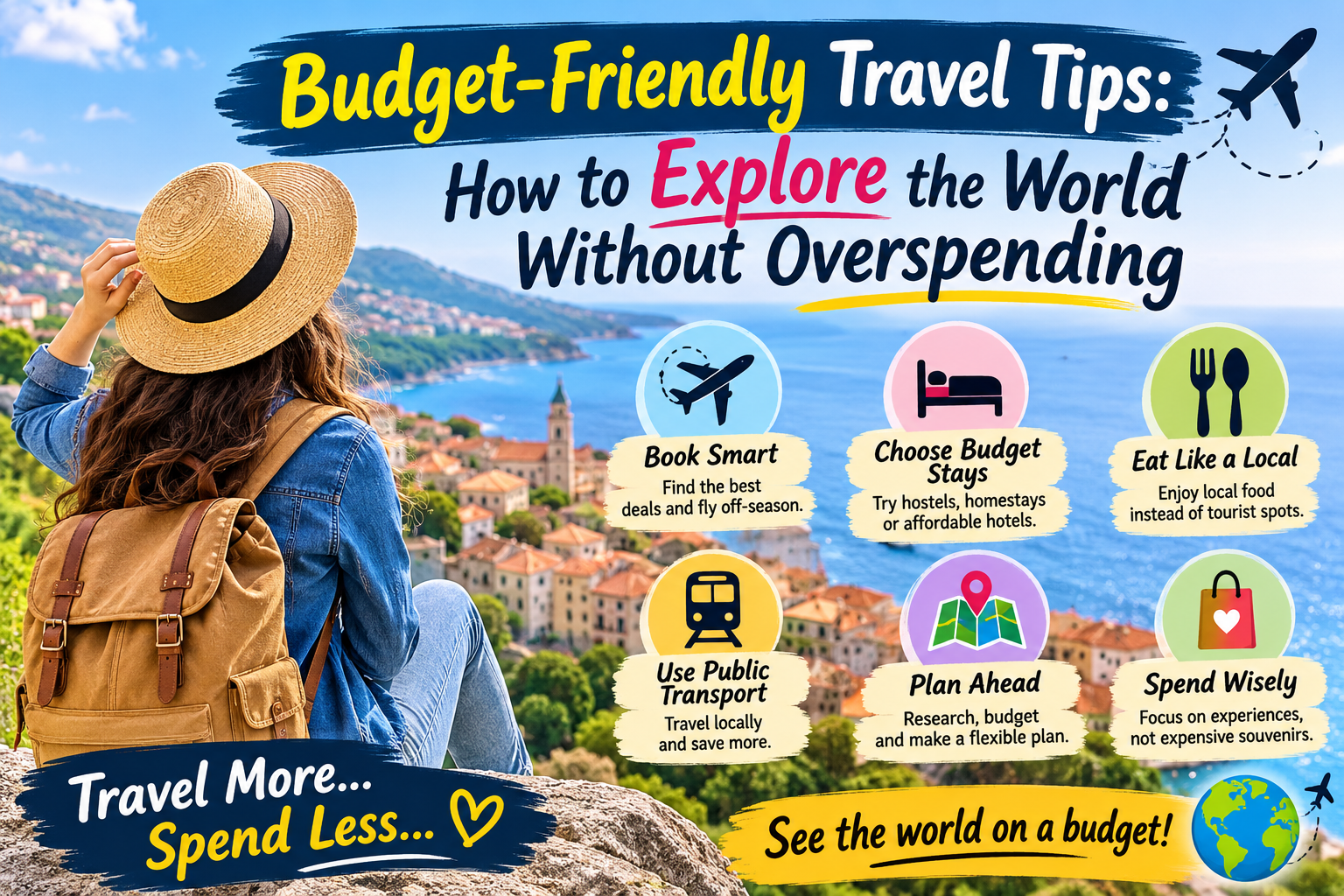
1. Plan Your Trip in Advance
One of the most effective ways to save money while traveling is to plan your trip early. Last-minute bookings often come with higher prices, especially during busy travel seasons.
Start by researching your destination, estimating your expenses, and creating a realistic travel budget. Compare transportation options, accommodation prices, and available activities before making reservations.
Early planning helps you:
- Find affordable flight tickets.
- Compare hotel and accommodation prices.
- Identify free tourist attractions.
- Avoid unnecessary expenses.
- Organize your travel schedule efficiently.
A well-planned trip allows you to enjoy your vacation without worrying about unexpected financial pressure.
2. Travel During the Off-Season
Traveling during peak tourist seasons can significantly increase your expenses. Flights, hotels, restaurants, and tourist attractions often become more expensive during holidays and popular vacation periods.
Consider traveling during the off-season or shoulder season when fewer tourists visit your chosen destination.
Some advantages include:
- Lower flight and hotel prices.
- Less crowded tourist attractions.
- More peaceful sightseeing experiences.
- Better opportunities to explore local culture.
- Greater flexibility when making reservations.
Before choosing your travel dates, research the weather conditions and local events to ensure that your destination remains enjoyable.
3. Choose Affordable Accommodation

Accommodation can take up a significant portion of your travel budget. Fortunately, there are several affordable alternatives to expensive hotels.
Depending on your destination and personal preferences, consider:
- Budget hotels and guesthouses.
- Hostels with private or shared rooms.
- Vacation rentals.
- Family-run accommodation.
- Reputable homestay services.
Always compare prices, read recent reviews, and check the location before booking. Choosing accommodation near public transportation can also reduce your daily transportation expenses.
Remember, comfortable and clean accommodation is more important than unnecessary luxury.
4. Save Money on Transportation
Transportation is another important factor when planning an affordable vacation. Instead of automatically choosing expensive travel options, explore different ways to reach your destination.
Here are some practical suggestions:
- Compare flight prices before purchasing tickets.
- Consider buses and trains for shorter journeys.
- Use public transportation instead of private taxis.
- Walk when visiting nearby attractions.
- Share transportation costs with travel companions.
- Check whether your destination offers affordable travel passes.
For international journeys, flexible travel dates can sometimes help you find better airfare deals.
5. Eat Like a Local
Food is an essential part of every travel experience, but eating at expensive tourist restaurants can quickly increase your expenses.
One of the best ways to enjoy authentic cuisine while saving money is to explore local restaurants, street food markets, and traditional food spots.
Consider these money-saving food tips:
- Choose local restaurants instead of expensive tourist cafés.
- Explore traditional markets and affordable food streets.
- Buy snacks and drinks from supermarkets.
- Book accommodation with kitchen facilities.
- Carry a reusable water bottle where safe drinking water is available.
Trying local food not only saves money but also introduces you to the culture and traditions of your destination.
6. Explore Free and Low-Cost Attractions
You do not need expensive activities to enjoy a memorable vacation. Many destinations offer beautiful attractions and exciting experiences that cost little or nothing.
Look for:
- Public parks and botanical gardens.
- Historical streets and landmarks.
- Beaches and scenic viewpoints.
- Museums with free-entry days.
- Cultural festivals and community events.
- Walking tours and local markets.
Research your destination before traveling to discover affordable activities. You may be surprised by how many wonderful experiences are available without spending much money.
7. Create a Realistic Travel Budget
A travel budget helps you manage your money and avoid unnecessary spending. Before leaving home, estimate how much you can comfortably spend throughout your journey.
Divide your budget into different categories:
| Expense Category | Budget Allocation |
|---|---|
| Transportation | 30% |
| Accommodation | 30% |
| Food and Drinks | 20% |
| Activities and Entertainment | 10% |
| Emergency Savings | 10% |
These percentages are only an example. Adjust them according to your destination, travel duration, and personal requirements.
Keep track of your daily expenses and avoid spending money on things that are not important to your travel experience.
8. Pack Smart and Avoid Extra Charges
Packing efficiently is another useful way to reduce travel expenses. Overpacking can result in additional baggage charges, unnecessary purchases, and inconvenience during your journey.
Before traveling, prepare a checklist of essential items, including:
- Comfortable clothing suitable for the weather.
- Necessary travel documents.
- Personal hygiene products.
- Chargers and electronic accessories.
- Comfortable walking shoes.
- Reusable shopping bags and water bottles.
Check your airline’s baggage policy before departure to avoid unexpected fees.
9. Use Technology to Find Better Travel Deals

Technology has made budget travel easier than ever. Several online platforms and mobile applications help travelers compare prices, discover affordable accommodation, and organize their trips.
You can use travel tools to:
- Compare airline ticket prices.
- Find budget-friendly hotels.
- Check public transportation routes.
- Discover affordable restaurants.
- Monitor travel expenses.
- Find free attractions and local events.
However, always compare the final prices and check booking conditions before making payments. Avoid suspicious offers that promise unrealistic discounts.
10. Avoid Unnecessary Shopping and Expenses
Shopping during vacations can be tempting, especially when visiting famous markets and shopping destinations. However, purchasing unnecessary souvenirs, expensive accessories, and luxury items can quickly affect your travel budget.
Set a reasonable shopping limit before your trip. Focus on meaningful souvenirs and memorable experiences rather than expensive purchases.
A successful vacation is about discovering new places, enjoying different cultures, and creating beautiful memories—not spending the most money.
Benefits of Budget-Friendly Travel
Budget-friendly travel offers several advantages beyond financial savings.
1. More Travel Opportunities: Saving money on one trip can help you plan additional journeys throughout the year.
2. Better Financial Management: Budget planning encourages responsible spending and improves money-management habits.
3. Authentic Cultural Experiences: Exploring local markets, traditional restaurants, and public attractions provides a deeper understanding of different cultures.
4. Less Financial Stress: Traveling within your financial limits allows you to enjoy your vacation with greater peace of mind.
5. More Meaningful Memories: Affordable travel encourages people to focus on experiences, adventures, and connections rather than expensive luxuries.
Conclusion
Exploring the world does not have to be expensive. With thoughtful planning, smart spending habits, and the right travel choices, anyone can enjoy memorable adventures without exceeding their budget.
From booking affordable accommodation and traveling during the off-season to enjoying local food and discovering free attractions, these budget-friendly travel tips can make your next vacation more affordable and enjoyable.
Remember, the true value of traveling is not determined by how much money you spend but by the experiences, cultures, and memories you collect along the way. Start planning wisely, explore confidently, and discover the world without overspending.



[…] Once the Fast Travel Bell recipe becomes available, players can craft additional bells at a Workbench. This allows them to expand their travel network beyond the first discovered item. The recipe uses copper ingots and rope. Having access to these materials makes it easier to establish transportation points on newly explored islands. […]