




Entrepreneurship is evolving rapidly as technology, globalization, and changing consumer expectations reshape the business world. Today, starting and managing a business involves more than simply offering products or services. Entrepreneurs must understand market trends, embrace innovation, and adapt to new challenges to remain competitive. The future of entrepreneurship offers exciting opportunities for individuals who are willing to think creatively, solve problems, and explore emerging markets.
From digital businesses and artificial intelligence to sustainable products and online services, the modern business environment provides countless possibilities for aspiring entrepreneurs. Understanding these developments can help business owners identify profitable opportunities and build successful ventures in an increasingly competitive world.
1. The Growing Importance of Digital Entrepreneurship
Digital technology has transformed the way businesses operate. Entrepreneurs no longer need large offices or expensive infrastructure to establish a business. With internet access, digital platforms, and modern business tools, individuals can launch and manage businesses from almost anywhere.
E-commerce websites, online marketplaces, digital marketing agencies, and remote consulting services are becoming popular business models. These opportunities allow entrepreneurs to reach customers beyond their local markets.
Some popular digital entrepreneurship opportunities include:
-
E-commerce businesses: Selling products through online stores and marketplaces.
-
Digital marketing services: Helping businesses improve their online visibility.
-
Online education: Offering courses, tutorials, and professional training.
-
Content creation: Developing valuable digital content for different audiences.
-
Freelancing services: Providing skills such as graphic design, writing, and web development.
Digital entrepreneurship is expected to remain an important part of the global economy, creating opportunities for both new and experienced business owners.
2. Artificial Intelligence and Business Innovation
Artificial intelligence (AI) is changing how businesses manage operations, communicate with customers, and make decisions. AI-powered tools can help entrepreneurs automate repetitive tasks, analyze customer behavior, and improve productivity.
Small businesses can use artificial intelligence to compete more effectively with larger organizations by reducing operational workloads and improving customer experiences.
For example, AI-powered customer support systems can answer common questions, while data analysis tools can help business owners understand market trends. Automated marketing tools can also assist with managing campaigns and reaching potential customers.
In the future, entrepreneurs who understand how to use AI responsibly may gain a significant advantage in their industries.
3. Sustainable Businesses and Green Entrepreneurship

Environmental awareness is becoming increasingly important to consumers and businesses. Many customers prefer products and services that support sustainability and reduce environmental impact.
This growing interest creates opportunities for entrepreneurs to develop environmentally responsible business models.
Some promising green business opportunities include:
-
Eco-friendly packaging and reusable products.
-
Renewable energy solutions.
-
Sustainable fashion and clothing.
-
Recycling and waste management services.
-
Organic farming and environmentally responsible agriculture.
Green entrepreneurship not only offers business opportunities but also encourages entrepreneurs to contribute positively to society and the environment.
4. The Rise of E-Commerce and Online Businesses
E-commerce has become one of the most influential developments in modern entrepreneurship. Consumers increasingly prefer shopping online because it offers convenience, product variety, and easy access to different brands.
Entrepreneurs can take advantage of this trend by establishing online stores, selling handmade products, offering digital services, or creating specialized product brands.
Social media platforms also provide opportunities to promote products and communicate directly with customers.
To build a successful e-commerce business, entrepreneurs should focus on:
-
Choosing products that meet customer needs.
-
Creating an attractive and user-friendly online store.
-
Providing reliable customer support.
-
Developing effective digital marketing strategies.
-
Maintaining product quality and timely delivery.
With proper planning and customer-focused strategies, online businesses can grow into successful brands.
5. The Importance of Creativity and Innovation
Innovation is one of the most important elements of entrepreneurship. As customer expectations and market conditions change, businesses must continuously improve their products, services, and operations.
Successful entrepreneurs identify problems and develop practical solutions. They look for opportunities to improve existing products or introduce something completely new.
Innovation does not always require advanced technology or major investments. Sometimes, a simple improvement in customer service, product design, or business delivery can make a significant difference.
Entrepreneurs who encourage creativity and remain open to new ideas are better prepared to respond to changing market demands.
6. Remote Work and Global Business Opportunities
Remote work has changed the traditional business environment. Many companies now work with employees, freelancers, and service providers from different countries.
This development creates opportunities for entrepreneurs to establish businesses that operate internationally without requiring a physical office in every location.
Remote business opportunities include:
-
Virtual assistance services.
-
Software development.
-
Online consulting.
-
Graphic design and creative services.
-
Digital content writing.
-
Online project management.
Entrepreneurs can build international professional networks, attract clients from different markets, and expand their businesses through digital communication tools.
7. Challenges Facing Future Entrepreneurs
Although the future of entrepreneurship offers many opportunities, starting and managing a business still involves challenges. Understanding these difficulties can help entrepreneurs prepare better strategies.
Some common challenges include:
Increasing Competition: More businesses are entering digital and traditional markets, making it important to develop a unique selling proposition.
Financial Management: Limited budgets, operational expenses, and uncertain revenue can make business growth difficult.
Changing Technology: Entrepreneurs must continuously learn about new tools and technologies to remain competitive.
Customer Expectations: Modern customers expect quality products, affordable prices, and excellent customer service.
Market Uncertainty: Economic changes and shifting consumer behavior can affect business performance.
Overcoming these challenges requires patience, careful planning, continuous learning, and the ability to adapt.
8. Essential Skills for Successful Entrepreneurs
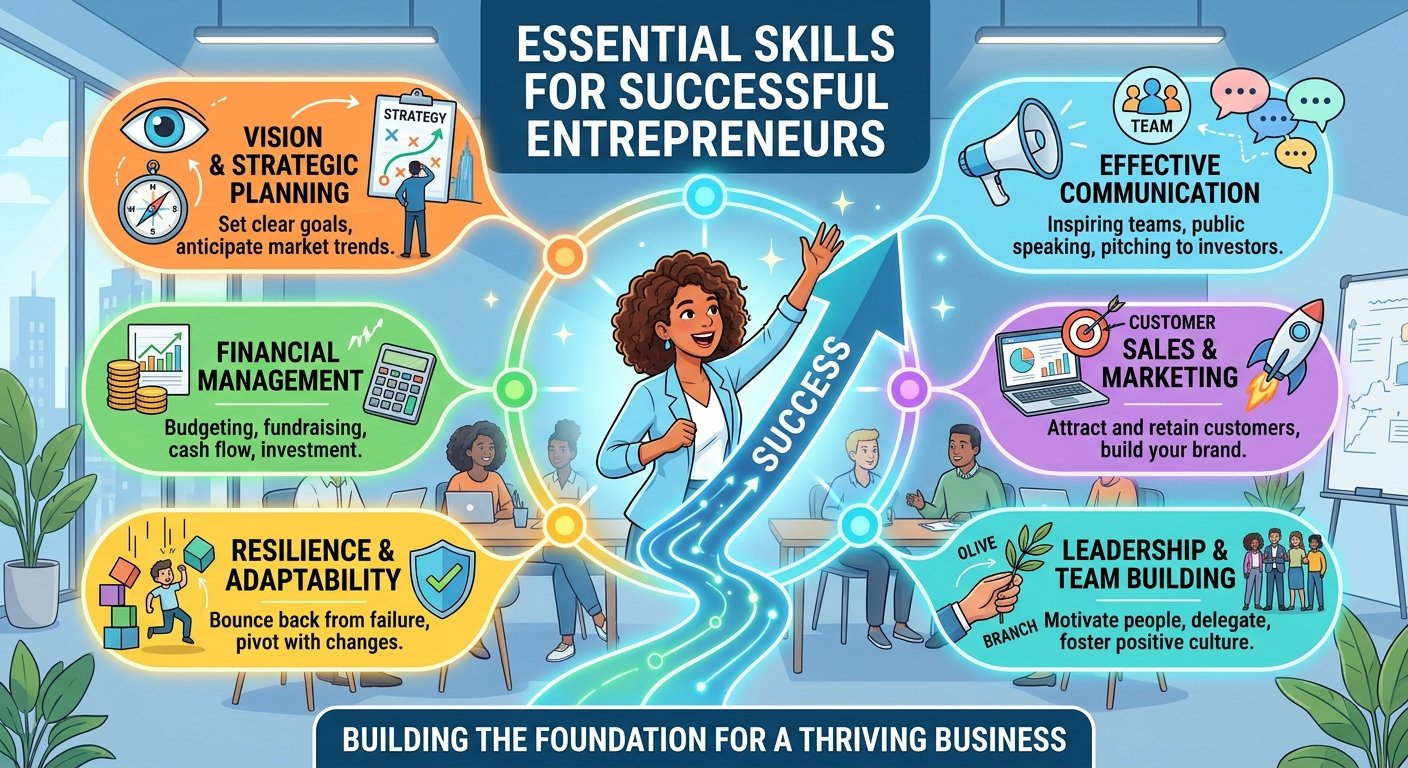
The future business environment will require entrepreneurs to develop a combination of technical, professional, and personal skills.
Some essential entrepreneurial skills include:
-
Leadership: Guiding teams and making effective business decisions.
-
Communication: Building strong relationships with customers, employees, and business partners.
-
Financial Literacy: Understanding budgets, expenses, investments, and business profits.
-
Problem-Solving: Finding practical solutions to unexpected challenges.
-
Adaptability: Responding positively to changing market conditions.
-
Digital Skills: Understanding online platforms, digital marketing, and modern business technologies.
-
Time Management: Organizing responsibilities and maintaining productivity.
Developing these skills can help entrepreneurs make better decisions and create stronger business foundations.
9. How to Prepare for the Future of Entrepreneurship
Building a successful business requires more than having a good idea. Entrepreneurs need a clear vision, practical strategies, and a willingness to learn from experience.
Here are some important steps to prepare for future business opportunities:
-
Identify Market Needs: Research customer problems and discover areas where better products or services are needed.
-
Develop a Business Plan: Establish clear goals, identify your target audience, and prepare a financial strategy.
-
Embrace Technology: Use digital tools to improve productivity, marketing, and business operations.
-
Build a Strong Brand: Create a professional identity that communicates your business values.
-
Understand Your Customers: Collect feedback and continuously improve the customer experience.
-
Continue Learning: Stay informed about industry developments, new technologies, and changing market trends.
-
Focus on Long-Term Growth: Build a business model that supports stability, innovation, and sustainable development.
These steps can help aspiring entrepreneurs turn their ideas into practical business opportunities.
10. The Future of Entrepreneurship in Emerging Markets
Emerging markets offer significant opportunities for entrepreneurs because of increasing internet access, growing digital economies, and changing consumer lifestyles.
Industries such as education, healthcare technology, agriculture, e-commerce, renewable energy, and financial technology are creating new possibilities for business development.
Entrepreneurs in developing countries can use digital platforms to reach wider audiences and introduce innovative solutions to local challenges.
Small businesses can also contribute to economic development by creating employment opportunities, supporting local communities, and encouraging innovation.
As technology becomes more accessible, entrepreneurship will continue to provide opportunities for individuals who want to develop new ideas and establish independent businesses.
Conclusion
The future of entrepreneurship is full of possibilities for individuals who are ready to embrace change and innovation. Digital technology, artificial intelligence, sustainable business practices, and global connectivity are transforming traditional business models and creating new opportunities across different industries.
However, long-term entrepreneurial success requires more than following popular trends. It depends on understanding customer needs, developing valuable products and services, managing resources effectively, and continuously improving business strategies.
Entrepreneurs who combine creativity, adaptability, leadership, and technological knowledge will be better prepared to succeed in a changing world. By recognizing emerging opportunities and taking thoughtful steps toward innovation, aspiring business owners can build successful ventures and contribute to a stronger global economy.ma