


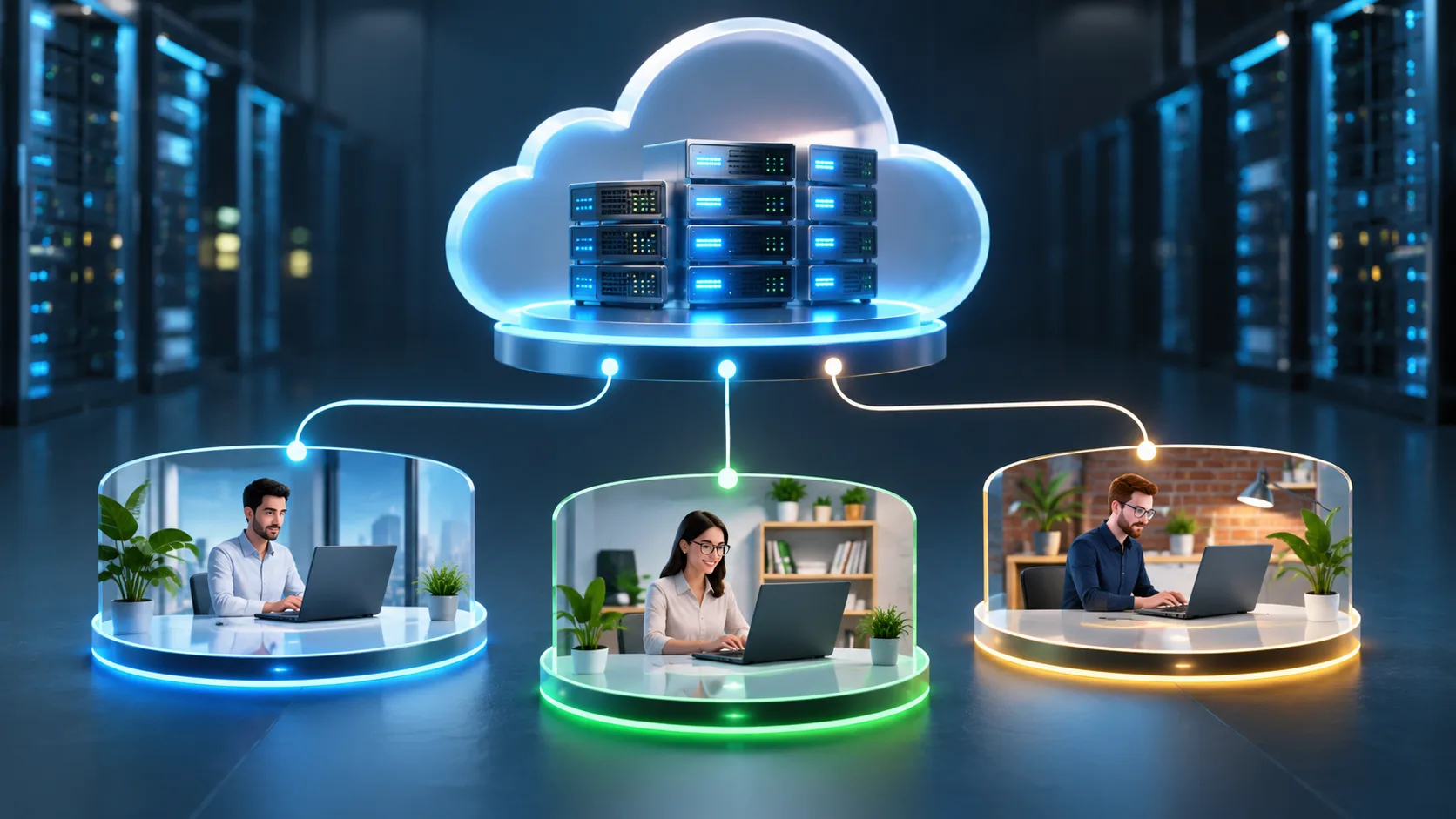
Multitenancy is a software architecture that allows multiple customers, organizations, or users to share the same application or computing infrastructure while keeping their data and settings separate. It is widely used in cloud computing, Software as a Service (SaaS), and enterprise applications because it helps businesses manage resources efficiently. Instead of building a completely separate system for every customer, providers use shared infrastructure to deliver services to many tenants.
Understanding what is multitenancy is important for anyone exploring cloud technology, software architecture, or modern business applications. This approach can reduce infrastructure costs, simplify software updates, and support business growth. However, it also introduces challenges involving data isolation, security, resource allocation, and system performance. This guide explains how multitenancy works, its architecture, benefits, limitations, examples, and practical applications.
What Is Multitenancy in Simple Terms?
Multitenancy is a software design approach in which one application or shared infrastructure serves multiple independent customers called tenants. Each tenant can access the same underlying system while maintaining separate data, accounts, permissions, and configuration settings. This arrangement helps software providers serve many organizations without maintaining a completely independent application environment for every customer.
Imagine an apartment building where several families live under the same roof but occupy separate apartments. They share structural facilities and building services while maintaining their own private living spaces. Multitenancy follows a similar principle because customers share software resources but have logically separated information and controlled access to their individual environments.
This architecture is especially common in cloud-based business applications and subscription software. A company using an online customer relationship management platform may share the application infrastructure with thousands of other organizations. However, each business sees only its authorized customer records, settings, and activities when the system is designed and configured correctly.
How Does Multitenancy Work?
Multitenancy works by allowing multiple tenants to use shared application components, databases, servers, or computing resources. The software identifies each tenant and applies the appropriate access rules when processing requests. This ensures that users interact with information and services associated with their own organization rather than accessing unrelated customer environments.
When a user signs in, the application determines which tenant account the user belongs to. The system then uses tenant-specific permissions, identifiers, and configuration settings to control available information and functionality. These controls must operate consistently throughout the application because incorrect tenant identification can create serious security and privacy problems.
Behind the scenes, shared infrastructure handles requests from different tenants while allocating computing resources according to system policies. Providers may use load balancing, container orchestration, database partitioning, and monitoring to maintain performance. The exact implementation depends on application requirements, customer expectations, and the level of isolation required for sensitive operations.
Understanding Multitenant Architecture
Multitenant architecture describes how a software system organizes shared components while supporting multiple independent customers. A typical design includes application services, data storage, authentication systems, and tenant management capabilities. These components work together to provide a consistent application experience without requiring completely separate software installations for every organization.
The application layer commonly processes requests from several tenants using shared program code. Tenant identification and authorization controls determine which data and configurations apply to each request. Some systems also provide customer-specific customization, allowing organizations to adjust workflows, branding, permissions, or features without modifying the shared application itself.
The data layer can use several isolation strategies depending on business and technical requirements. Some applications store tenant information within shared database tables, while others maintain separate schemas or databases. Choosing the appropriate structure involves balancing operational efficiency, security requirements, database performance, and the complexity of managing customer information.
Multitenancy vs. Single-Tenancy Architecture
Single-tenancy architecture generally provides each customer with a dedicated application instance or environment. This approach can offer greater control over configurations, upgrade schedules, and certain infrastructure resources. However, maintaining separate environments may increase operational costs and administrative complexity, particularly when a provider supports many customers.
Multitenancy uses shared application components to serve multiple organizations, which can improve resource utilization and simplify centralized management. Customers receive access to a common platform while their information remains separated through appropriate technical controls. This arrangement is particularly useful for SaaS providers that need to support growing customer bases efficiently.
Neither architecture is automatically better in every situation because the best choice depends on security, compliance, performance, and customization needs. Dedicated environments may suit organizations with specialized requirements, while multitenant platforms can provide economical and scalable services. Businesses should evaluate the actual isolation mechanisms rather than assuming architectural labels guarantee particular security outcomes.
Different Types of Multitenancy Models
Multitenancy can be implemented through several models that share different parts of the software infrastructure. In some designs, tenants share both the application and database resources, while other systems separate particular components. The selected approach influences operating costs, maintenance complexity, performance management, and the degree of isolation available to customers.
A shared database with shared tables is one common model. Tenant records exist in the same tables and are distinguished through tenant identifiers and access controls. This approach can be efficient for managing large numbers of relatively small tenants, but it requires carefully designed queries, authorization checks, and data protection measures.
Other models use separate database schemas or dedicated databases for individual tenants while retaining shared application services. These approaches can provide additional flexibility for data management and certain customer requirements. However, they may also increase provisioning, migration, monitoring, and backup complexity as the number of tenants grows.
How Data Isolation Works in Multitenancy
Data isolation is one of the most important requirements in a multitenant application. It prevents users from one tenant from accessing another tenant’s confidential information without authorization. Strong isolation depends on consistent identity verification, access control policies, secure database operations, and careful management of shared application components.
Many systems assign a unique tenant identifier to every organization and associate it with relevant records. Application requests must be evaluated against that identifier and the user’s permissions before data is accessed. Developers may also use database row-level security, separate schemas, or other mechanisms to strengthen protection against accidental cross-tenant access.
Data isolation must extend beyond ordinary database queries to include backups, logs, caches, file storage, and background processing. An application can expose sensitive information if any shared component handles tenant context incorrectly. Regular testing, security reviews, and monitoring help identify potential isolation failures before they create widespread customer exposure.
Benefits of Multitenancy for Businesses
One major benefit of multitenancy is improved infrastructure efficiency. Instead of maintaining separate application environments for every customer, providers can share resources across multiple tenants. This arrangement may reduce operational overhead and allow businesses to deliver software services at more competitive prices, depending on system design and usage patterns.
Centralized maintenance is another advantage because updates can often be deployed across the shared application platform. Providers may introduce security patches, performance improvements, and new features without managing thousands of independent installations. However, changes still require careful testing to ensure that updates do not disrupt tenant-specific configurations or critical workflows.
Multitenancy can also support business growth by simplifying the onboarding of new customers. Automated tenant provisioning allows providers to create accounts, assign permissions, and configure services more efficiently. When supported by suitable infrastructure and capacity planning, this flexibility helps organizations expand their customer base without rebuilding their entire software platform.
Challenges and Limitations of Multitenancy
Despite its advantages, multitenancy introduces technical challenges because many customers depend on shared resources. A poorly configured system may experience performance problems when one tenant consumes unusually large amounts of computing capacity. This situation is commonly called the noisy neighbor problem and can affect other customers using the same infrastructure.
Security is another significant concern because applications must consistently enforce separation between different organizations. Programming errors, inadequate authorization checks, and incorrect data queries can create cross-tenant exposure. The shared architecture does not inherently make a system insecure, but it requires strong controls and ongoing testing to maintain reliable protection.
Customization can also be more complicated when tenants share common application code. Providers must accommodate different customer needs without creating changes that negatively affect other organizations. Feature flags, configuration settings, and carefully designed extension mechanisms can help balance customer flexibility with the efficiency of operating a shared platform.
Multitenancy in Cloud Computing
Multitenancy is closely connected to cloud computing because cloud providers commonly share physical infrastructure among many customers. Computing resources, storage systems, and networking components may support numerous organizations through virtualization and other isolation technologies. This allows providers to offer flexible services without dedicating an entire physical environment to every customer.
Infrastructure as a Service platforms often use virtual machines and related technologies to separate customer workloads. Platform as a Service environments may share operating systems, runtimes, or managed application components. SaaS applications commonly share application services directly, although the amount of dedicated infrastructure varies by provider and product.
It is important to distinguish infrastructure multitenancy from application multitenancy because they operate at different technical layers. An application may have dedicated customer instances while running on shared cloud hardware. Understanding these differences helps businesses evaluate cloud architecture more accurately when comparing deployment models, security controls, and resource isolation.
Multitenancy in SaaS Applications
Software as a Service is one of the most common environments for multitenant architecture. SaaS providers deliver applications over the internet while managing much of the underlying infrastructure, maintenance, and software deployment. Customers access the service through accounts rather than installing and operating their own complete application environments.
A multitenant SaaS platform can support many organizations through shared services while maintaining tenant-specific accounts and configurations. Businesses may customize workflows, roles, dashboards, and other settings according to their needs. The application provider manages shared updates and infrastructure operations, helping customers focus on using the software rather than maintaining it.
This architecture supports subscription-based business models because providers can distribute certain operational costs across a larger customer base. However, successful SaaS multitenancy requires reliable billing, tenant provisioning, authorization, monitoring, and support processes. These capabilities help ensure that each customer receives appropriate functionality and service quality within the shared environment.
Real-World Examples of Multitenancy
Customer relationship management platforms provide familiar examples of multitenancy. Multiple businesses can use the same cloud-based CRM application while maintaining separate customer records, sales pipelines, and user permissions. The platform’s shared services support everyday operations, while tenant-specific controls determine which information each organization can access.
Cloud-based collaboration and productivity platforms also demonstrate how shared systems can support independent organizations. Companies may use common application infrastructure for communication, document management, and administrative functions. Each organization receives its own accounts, access policies, and workspace configurations, although the underlying architecture varies between services and deployment plans.
Other examples include learning management platforms, accounting applications, e-commerce software, and project management systems. These services may support thousands of customers with different business requirements. Multitenancy allows providers to manage common functionality centrally while offering each organization a separate logical environment for its users and operational information.
How Multitenancy Supports Scalability
Scalability refers to a system’s ability to handle increasing workloads without unacceptable performance degradation. Multitenancy can support scalability by allowing application infrastructure to serve additional customers through shared services. However, scalability depends on implementation quality, resource capacity, and architecture rather than the presence of multitenancy alone.
Horizontal scaling is a common approach that involves adding more application instances or computing resources as demand increases. Load balancers distribute incoming requests, while database strategies help manage growing volumes of tenant information. Automated infrastructure systems may adjust capacity according to demand, although these capabilities require careful configuration and monitoring.
Tenant-level resource management is particularly important because usage patterns can vary widely between organizations. Providers may establish quotas, rate limits, and workload priorities to prevent individual tenants from overwhelming shared systems. These controls help maintain predictable performance and support continued growth as customer numbers and application activity increase.
Security Best Practices for Multitenant Systems
Secure multitenant systems require strong authentication and authorization mechanisms that consistently enforce tenant boundaries. Every sensitive request should verify the user’s identity, permissions, and tenant association. Relying on information supplied directly by users without server-side validation can introduce serious access control vulnerabilities.
Encryption helps protect sensitive data during transmission and storage, while secure key management supports confidentiality. Providers should also implement monitoring, logging, vulnerability management, and appropriate incident response procedures. Where necessary, additional isolation mechanisms can help protect workloads or customer information with specialized security requirements.
Security testing should specifically examine whether data or functionality can be accessed across tenant boundaries. Automated tests, code reviews, and independent assessments may help identify weaknesses. Strong security also depends on operational practices, including employee access controls, backup protection, configuration management, and timely responses to discovered vulnerabilities.
How to Design a Multitenant Database
Designing a multitenant database begins with understanding customer data volumes, isolation requirements, and expected growth. Developers must decide whether tenants should share tables, use separate schemas, or have dedicated databases. Each option creates different tradeoffs involving operating costs, query performance, maintenance, and administrative flexibility.
Shared-table designs commonly require tenant identifiers to be included in database records and access operations. Appropriate indexing and authorization controls help support performance and prevent accidental data exposure. Database-level safeguards can provide additional protection, but they must be configured correctly and tested alongside application authorization.
Separate databases may simplify certain customer-specific backup, restoration, and data residency requirements. However, operating many databases increases the complexity of migrations, monitoring, and lifecycle management. Selecting an appropriate strategy requires evaluating technical requirements rather than assuming the most isolated or most shared structure is always preferable.
Multitenancy and Performance Management
Performance management is important because multiple tenants may compete for processing power, memory, storage, and network capacity. Without suitable controls, resource-intensive operations from one customer can reduce responsiveness for others. Providers must monitor overall system health while also understanding individual tenant usage patterns.
Rate limiting, workload queues, caching, and resource quotas can help distribute capacity more effectively. Some platforms allocate separate processing resources to larger customers while retaining other shared components. This hybrid approach can improve flexibility when organizations have significantly different performance requirements or service agreements.
Monitoring tools should track application response times, database usage, error rates, and resource consumption across tenants. Identifying unusual activity early helps teams address potential bottlenecks before they affect service quality. Regular capacity planning and performance testing also support stable operations as the number of customers increases.
Multitenancy and Cost Efficiency
Cost efficiency is a major reason software providers choose multitenant architecture. Sharing application services and infrastructure can reduce duplicated operating resources, particularly when supporting many customers with similar requirements. Centralized deployment and maintenance may also lower the administrative effort associated with managing separate customer environments.
However, multitenancy does not automatically guarantee lower costs in every situation. Developing secure isolation controls, sophisticated billing systems, tenant monitoring, and scalable database infrastructure can require significant investment. The financial benefits depend on customer volume, workload characteristics, operational efficiency, and the complexity of the application.
Businesses evaluating multitenant platforms should compare total costs rather than focusing only on subscription prices. Consider maintenance, integration, customization, security requirements, and potential migration expenses. A well-managed shared service can provide excellent value, but dedicated environments may be justified for customers with specialized technical or regulatory needs.
When Should a Business Use Multitenancy?
Multitenancy is often suitable for software providers serving many organizations with similar core requirements. SaaS businesses, collaboration platforms, and cloud-based enterprise applications can benefit from centralized operations and shared infrastructure. The architecture is especially attractive when customer onboarding, consistent upgrades, and scalable resource management are important business priorities.
Businesses handling highly sensitive information must carefully evaluate whether the proposed isolation controls meet their requirements. Regulatory obligations, data residency rules, and customer contracts may influence the appropriate architecture. Multitenant solutions can satisfy demanding requirements when properly designed, but the level of protection must be demonstrated rather than assumed.
The decision should also consider customer customization needs, workload differences, and long-term operational goals. A hybrid design may provide shared services while dedicating particular components to selected tenants. Choosing the right architecture involves balancing efficiency, security, performance, and flexibility according to the organization’s actual business requirements.
Conclusion
Multitenancy is an important software architecture that allows multiple customers to use shared systems while maintaining separate data, permissions, and configurations. It plays a central role in cloud computing and modern SaaS applications because it supports efficient resource utilization and centralized management. Understanding how shared infrastructure and logical isolation work together helps explain its growing importance.
The main benefits of multitenancy include potential cost savings, easier customer onboarding, centralized updates, and scalable application delivery. However, shared systems also require careful attention to security, performance, data management, and tenant-specific needs. Strong architecture and operational controls are essential for protecting customer information and maintaining reliable service.
Whether you’re developing a SaaS platform or evaluating cloud software for your business, understanding multitenancy can support better technical decisions. The right approach depends on customer requirements, security expectations, and long-term growth plans. With thoughtful design and consistent management, multitenant systems can provide efficient and dependable services to many organizations.
Frequently Asked Questions
What Is Multitenancy in Simple Words?
Multitenancy is a system design where multiple customers share the same software or infrastructure while keeping their data and settings separate. It allows providers to serve many organizations efficiently.
What Is an Example of Multitenancy?
A cloud-based CRM platform serving multiple companies is a common example. Each business uses shared application services while maintaining separate customer records, user accounts, and permissions.
What Is the Difference Between Multitenancy and Single-Tenancy?
Multitenancy allows several customers to share application resources, while single-tenancy generally provides dedicated application environments. Both approaches have different cost, management, customization, and isolation considerations.
Is Multitenancy Secure?
Multitenancy can be secure when applications use strong tenant isolation, authentication, authorization, encryption, and monitoring. However, weak access controls or configuration errors can expose information across customer environments.
Why Is Multitenancy Important in Cloud Computing?
Multitenancy helps cloud providers share infrastructure efficiently, support multiple customers, and scale services. It can reduce duplicated resources and simplify management while maintaining appropriate separation between customer environments.