



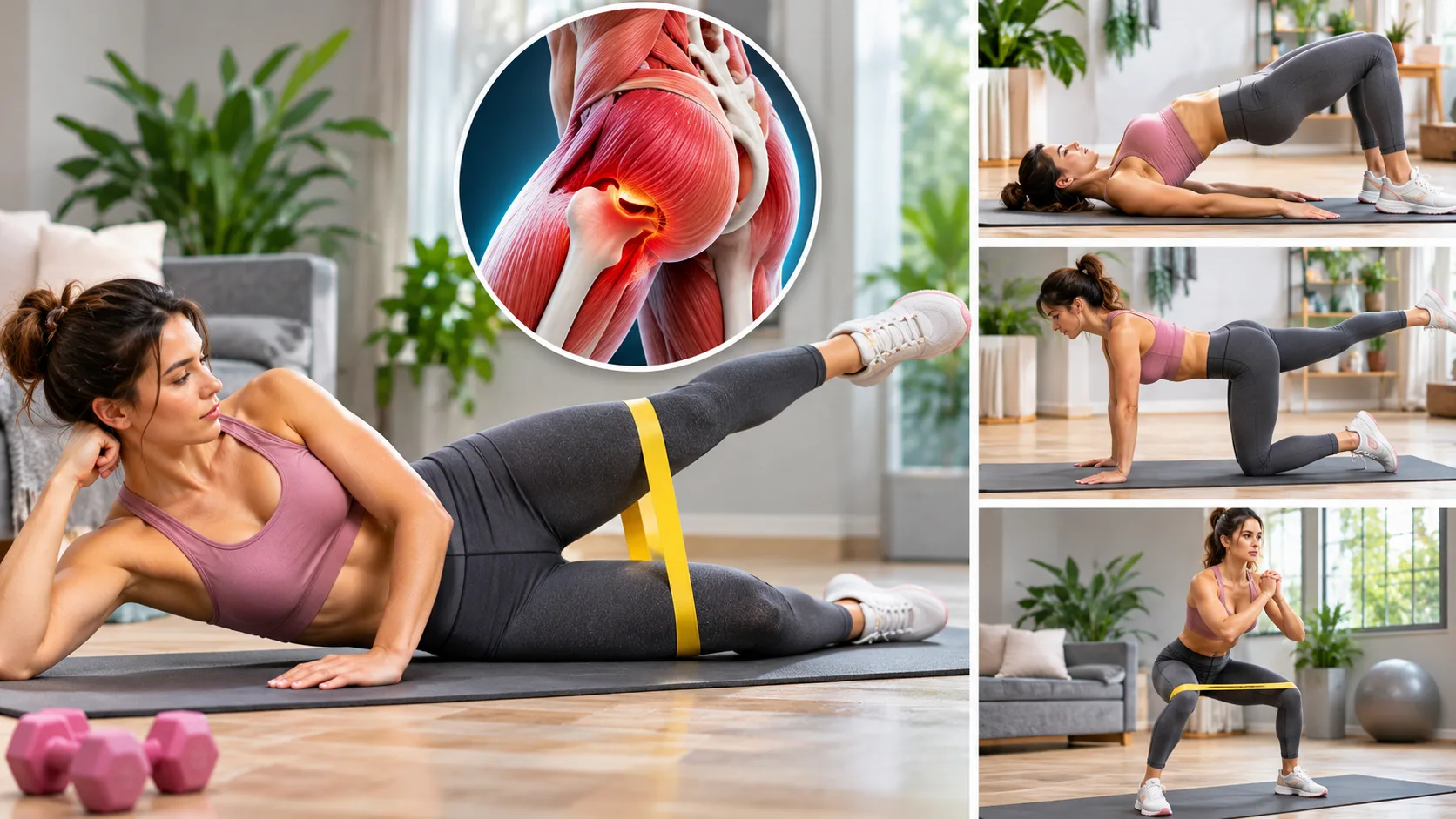
Strong hips play an important role in everyday activities, including walking, climbing stairs, standing, and maintaining balance. The muscles surrounding your hips help control movement and support your pelvis during different physical tasks. When these muscles work together effectively, ordinary movements may feel more comfortable and controlled. Learning suitable exercises can help you improve functional strength without complicated equipment.
Practicing hip strengthening exercises can support mobility, stability, and coordination throughout the lower body. Simple movements such as glute bridges, clamshells, squats, and step-ups train different muscles around the hip joint. However, proper technique is important because uncomfortable positions or excessive resistance can aggravate existing problems. Starting with manageable exercises allows you to build strength gradually.
This guide explains how to strengthen your hips using beginner-friendly movements and practical exercise techniques. You will learn which muscles support hip function, how to perform common exercises, and what mistakes to avoid. It also covers recovery, exercise progression, and warning signs that require medical attention. These tips can help you create a comfortable and sustainable strengthening routine.
Why Hip Strengthening Exercises Are Important
Hip strengthening exercises help train the muscles that support movement between your pelvis and legs. These muscles contribute to walking, climbing stairs, standing on one leg, and changing direction. They also work with the knees, ankles, and trunk to maintain coordination. Improving their strength can make certain everyday activities feel easier and more controlled.
The hip joint is responsible for several movements, including bending, extending, rotating, and moving the leg sideways. Different muscles contribute to each action, which is why a varied strengthening routine is useful. Focusing on only one movement may leave other functions less developed. A balanced approach helps train the hips through several comfortable movement patterns.
Hip exercises are also included in some rehabilitation programs for people experiencing movement limitations or certain lower-body conditions. However, strengthening alone does not treat every cause of hip, knee, or back pain. The appropriate activities depend on individual symptoms and medical history. Persistent discomfort deserves assessment rather than automatically assuming that weak hip muscles are responsible.
Understanding the Main Muscles Around Your Hips
Several muscle groups work together to support the hip joint and surrounding pelvis. The gluteus maximus is a major hip extensor, helping move the thigh backward relative to the body. The gluteus medius and minimus contribute to sideways movement and pelvic stability. These muscles are particularly important during walking and single-leg activities.
The hip flexors are located near the front of the hip and help lift the thigh toward the torso. Important muscles include the iliopsoas and rectus femoris, which contribute to different movements. The adductor muscles along the inner thigh help bring the leg toward the body’s midline. Together, these groups support controlled movement in several directions.
Deep hip rotators also contribute to joint positioning and stability during physical activity. Meanwhile, muscles around the abdomen and lower back help coordinate movement between the trunk and pelvis. No single muscle performs every hip function independently. Understanding these relationships helps explain why effective hip strengthening exercises often include several different movement patterns.
How to Prepare for Hip Strengthening Exercises
Preparing for hip exercises begins with choosing movements that match your comfort, mobility, and experience. Beginners can often start with bodyweight exercises that require minimal equipment. A stable chair, supportive exercise mat, or low step may be useful. Make sure your exercise space is clear of obstacles and provides enough room for comfortable movement.
A short warm-up involving gentle walking or easy lower-body movements can help prepare your body for exercise. Begin slowly and notice how your hips respond. Avoid forcing stretches or performing demanding movements immediately when you feel stiff. Comfortable movement is a more useful starting point than attempting the hardest variation available.
If you are recovering from a hip injury, surgery, or another medical condition, ask a qualified professional which exercises are appropriate. Some movements may need to be modified or temporarily avoided. Exercise should not produce sharp pain, unusual weakness, or worsening symptoms. Preparing thoughtfully helps reduce unnecessary strain and supports a more manageable routine.
Glute Bridges for Hip Extension Strength
Glute bridges are popular hip strengthening exercises because they primarily train the muscles responsible for extending the hips. The movement involves lifting your pelvis while lying on your back. It engages the gluteus maximus alongside supporting muscles. Bridges can be performed without additional equipment, making them a practical starting point for many beginners.
Begin by lying on your back with your knees bent and feet resting comfortably on the floor. Keep your arms at your sides and gently press through your feet to raise your hips. Lift until your trunk and thighs form a comfortable alignment without excessively arching your lower back. Lower slowly toward the starting position.
Focus on controlled movement rather than lifting your hips as high as possible. Avoid pushing through sharp pain or using your lower back to compensate for limited hip movement. If necessary, reduce the lifting height to maintain comfort. As the exercise becomes easier, a qualified instructor can help you explore appropriate variations.
Clamshell Exercises for Outer Hip Stability
Clamshells target muscles involved in hip rotation and pelvic stability, including portions of the gluteus medius. These muscles contribute to maintaining control during walking and balancing activities. The exercise is performed while lying on one side with the knees bent. Its simple setup makes it suitable for many beginner-level strengthening routines.
Lie on your side with your head comfortably supported and your hips and knees slightly bent. Keep your feet together while slowly lifting the upper knee a short distance. Avoid allowing your pelvis to roll backward during the movement. Return the knee to its starting position with control before repeating comfortably.
The movement does not need to be large to engage the intended muscles. Excessive rotation through the pelvis may change the exercise and reduce control. If lying on one side causes hip discomfort, adjust your position or consider an alternative. Clamshells can complement bridges and squats by training a different hip movement pattern.
Side-Lying Leg Raises for Hip Abductor Strength
Side-lying leg raises help strengthen the hip abductor muscles, which move the leg away from the body’s midline. These muscles also assist with pelvic stability during single-leg activities. The exercise mainly involves controlled sideways movement while lying on a supportive surface. It can be performed without weights or additional resistance.
Start by lying on your side with your lower leg bent slightly for stability. Keep the upper leg comfortably straight and raise it a short distance toward the ceiling. Avoid rotating your torso or lifting the leg excessively high. Slowly lower the leg while maintaining a steady position through your trunk and pelvis.
Pay attention to whether the movement feels comfortable around the outer hip. Some people with greater trochanteric pain syndrome or other hip conditions may find side-lying exercises uncomfortable. In these cases, standing hip abduction or another professionally recommended exercise may be more suitable. The best variation is one that allows controlled movement without aggravating symptoms.
Squats for Functional Hip and Leg Strength
Squats train several lower-body muscles, including the glutes, quadriceps, and hip stabilizers. The movement resembles sitting down and standing up from a chair, making it relevant to everyday activities. Bodyweight squats are often used in beginner strengthening programs. Their difficulty can be adjusted by changing the movement depth or using support.
Stand with your feet positioned comfortably and your weight balanced. Slowly bend your hips and knees as though lowering yourself toward a chair. Keep your movements controlled and stop at a depth that feels manageable. Press through your feet to return to standing without rushing or holding your breath.
A sturdy chair can provide useful support when learning the movement. Avoid forcing your knees or hips into uncomfortable positions simply to achieve a deeper squat. If balance is difficult, use an appropriate handhold. Controlled squats help develop coordinated lower-body strength while allowing adjustments based on individual comfort and mobility.
Step-Ups to Improve Hip Strength and Balance
Step-ups strengthen muscles involved in climbing stairs, lifting the body upward, and maintaining balance. They engage the glutes, quadriceps, and several supporting muscles around the hips. This makes them useful for functional lower-body training. Beginners can practice the movement using a low, stable step with suitable support nearby.
Place one foot securely on the step and shift your weight gradually onto that leg. Press through the supporting foot to move upward with control. Return to the floor slowly while keeping your balance. Use a railing or other sturdy support if needed, especially when learning the movement.
Choose a step height that does not require excessive effort or uncomfortable joint bending. Avoid pushing forcefully from the trailing leg or rushing through the movement. If the exercise causes hip or knee pain, reduce the height or select another activity. Gradual practice can improve confidence with stair-like movements.
Standing Hip Abduction and Extension Exercises
Standing hip exercises can provide an alternative for people who prefer not to lie on the floor. Hip abduction involves moving the leg sideways, while hip extension moves the leg backward. Both actions engage muscles important for pelvic control and everyday movement. A stable chair or countertop can provide support during these exercises.
For standing hip abduction, hold a secure support and slowly move one leg sideways within a comfortable range. Keep your trunk relatively upright and avoid leaning excessively. Return the leg with control before switching sides. Small movements are acceptable when they allow better balance and coordination.
For hip extension, use the same supported position and gently move one leg backward without arching your lower spine. Keep the movement comfortable rather than trying to lift the leg as far as possible. Standing variations may be useful when floor exercises are inconvenient. Stop if symptoms worsen or balance becomes difficult to maintain.
Hip Flexor Strengthening for Better Movement Control
Hip flexor strengthening trains muscles responsible for lifting the thigh toward the torso. These muscles contribute to walking, stepping, and several everyday movements. Although hip flexor stretching receives considerable attention, strengthening can also support normal function. Exercises should be selected according to comfort and individual mobility rather than assumptions about muscle tightness.
A simple seated knee lift can introduce controlled hip flexion. Sit upright on a stable chair with both feet resting on the floor. Slowly raise one knee a comfortable distance without leaning backward or holding your breath. Lower the foot gently and repeat with the other leg when appropriate.
Another option involves supported standing knee raises performed at a relaxed pace. Hold a sturdy surface and lift one knee without forcing the hip into an uncomfortable position. Keep your trunk controlled and return the foot slowly. These movements can complement glute exercises by strengthening muscles responsible for another important direction of hip movement.
Common Mistakes During Hip Strengthening Exercises
One common mistake is moving too quickly and losing control of the exercise. Rushed repetitions can make it difficult to maintain balance or recognize uncomfortable movement patterns. Performing exercises more slowly often improves awareness and coordination. The goal is to practice suitable movements rather than complete the greatest possible number of repetitions.
Another mistake is increasing exercise difficulty before developing comfortable technique. More resistance or a larger range of motion does not automatically produce better results. Excessive challenge may increase fatigue or aggravate sensitive tissues. Selecting manageable variations allows strength to develop gradually while keeping the exercises practical and enjoyable.
Some people also focus exclusively on one muscle group while overlooking other lower-body movements. The hips work alongside the knees, ankles, and trunk during everyday activity. A varied strengthening routine can help train these relationships. Avoid continuing through persistent pain, and adjust the program when recovery or comfort becomes difficult.
How Often Should You Do Hip Strengthening Exercises?
The appropriate training schedule depends on your experience, activity level, and recovery needs. Beginners may find two nonconsecutive strengthening sessions each week a manageable starting point. This provides opportunities to practice while allowing recovery between challenging workouts. There is no requirement to perform demanding hip exercises every day.
A session can include a few movements that train different hip functions, such as bridges, supported squats, and standing leg movements. Start with an amount that allows comfortable technique and normal breathing. The exact repetitions can vary between individuals. Choose consistency and quality instead of forcing yourself to complete an arbitrary target.
As exercises become easier, you may gradually adjust the challenge while maintaining suitable recovery. Comfortable walking and other enjoyable activities can also remain part of your routine. Persistent soreness, unusual fatigue, or worsening symptoms suggest that changes may be necessary. A sustainable strengthening plan should support everyday movement without creating unnecessary physical stress.
Conclusion
Hip strengthening exercises can help support comfortable movement, balance, and lower-body stability. The muscles surrounding the hips contribute to walking, climbing stairs, standing, and many other everyday activities. Glute bridges, clamshells, squats, and step-ups provide useful options for training different movement patterns. Choosing suitable exercises is more important than attempting complicated routines.
Proper technique involves controlled movement, comfortable joint positions, and gradual progression. Beginners can start with bodyweight exercises and use stable support when needed. Recovery and varied activity also contribute to a balanced strengthening program. Exercises should be modified when they cause pain or become difficult to perform comfortably.
Remember that hip strength is one part of overall physical function. Persistent discomfort or significant movement limitations may require professional evaluation rather than additional exercise. Focus on practical improvements in balance, coordination, and everyday activities. With consistent, manageable practice, hip strengthening can become a useful part of maintaining healthy movement.
Frequently Asked Questions
What Are the Best Exercises to Strengthen Your Hips?
Glute bridges, clamshells, supported squats, step-ups, and standing hip abduction are useful options. The best exercises depend on your comfort, mobility, and the hip movements you want to improve.
Can You Strengthen Your Hips at Home?
Yes, many hip exercises require only body weight and a stable surface. Bridges, clamshells, chair squats, and standing leg movements can be performed at home when they feel comfortable.
How Long Does It Take to Strengthen Hip Muscles?
Strength improvements develop gradually and vary between individuals. Some people notice better movement control within several weeks, while further progress may take longer depending on consistency, activity, and recovery.
Should You Exercise Your Hips Every Day?
Challenging strengthening exercises usually benefit from recovery between sessions. Beginners may start with two nonconsecutive weekly sessions and adjust according to comfort, experience, and professional guidance when necessary.
Can Hip Strengthening Exercises Help With Hip Pain?
Certain hip conditions may improve with appropriately selected strengthening exercises. However, hip pain has many possible causes, and some movements can worsen symptoms. Persistent or severe discomfort requires medical assessment.