



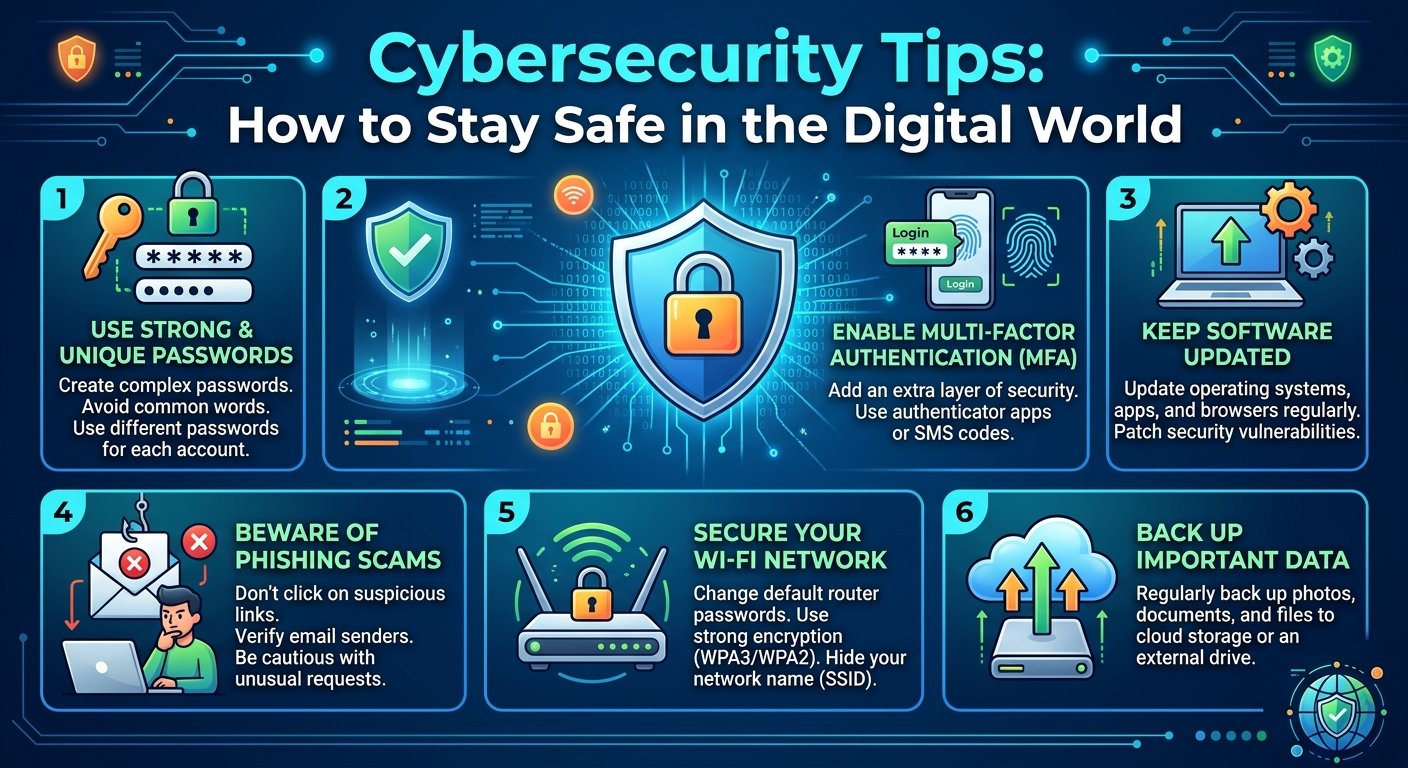
Introduction
In today’s technology-driven world, the internet has become an essential part of our daily lives. From online shopping and banking to social media, education, and business communication, people rely on digital platforms for almost everything. While technology offers convenience and endless opportunities, it also creates risks related to online security and personal privacy.
Cybercriminals continuously develop new methods to steal personal information, access private accounts, and exploit online users. This makes cybersecurity more important than ever. Understanding basic cybersecurity practices can help individuals and businesses protect their digital information and avoid online threats.
In this article, we will explore practical cybersecurity tips and effective ways to stay safe in the digital world.
What Is Cybersecurity?
Cybersecurity refers to the practices, technologies, and strategies used to protect computers, smartphones, networks, applications, and personal information from digital attacks.
The main purpose of cybersecurity is to prevent unauthorized access, data theft, online fraud, and other cyber threats.
Some common types of cybersecurity include:
-
Network Security: Protecting computer networks from unauthorized access and cyberattacks.
-
Information Security: Keeping personal and business information safe from theft or misuse.
-
Application Security: Protecting software and applications from security weaknesses.
-
Cloud Security: Securing information stored on cloud platforms.
-
Personal Cybersecurity: Protecting individual devices, online accounts, and digital identities.
By understanding these areas, internet users can make better decisions and improve their online safety.
Why Is Cybersecurity Important?
Cybersecurity plays a significant role in protecting sensitive information and maintaining digital privacy. Without proper security measures, individuals and organizations may become victims of cybercrime.
Here are some important reasons why cybersecurity matters:
-
Protects Personal Information: It helps keep private details, passwords, financial information, and personal documents secure.
-
Prevents Financial Fraud: Strong security practices reduce the risk of online banking fraud and unauthorized transactions.
-
Maintains Privacy: Cybersecurity protects personal conversations, photographs, and other private information.
-
Prevents Data Loss: Security systems help protect important files from accidental damage, theft, or malicious attacks.
-
Builds Digital Trust: Secure websites and applications create confidence among customers and online users.
As more activities move online, cybersecurity has become an essential part of responsible internet usage.
10 Essential Cybersecurity Tips to Stay Safe Online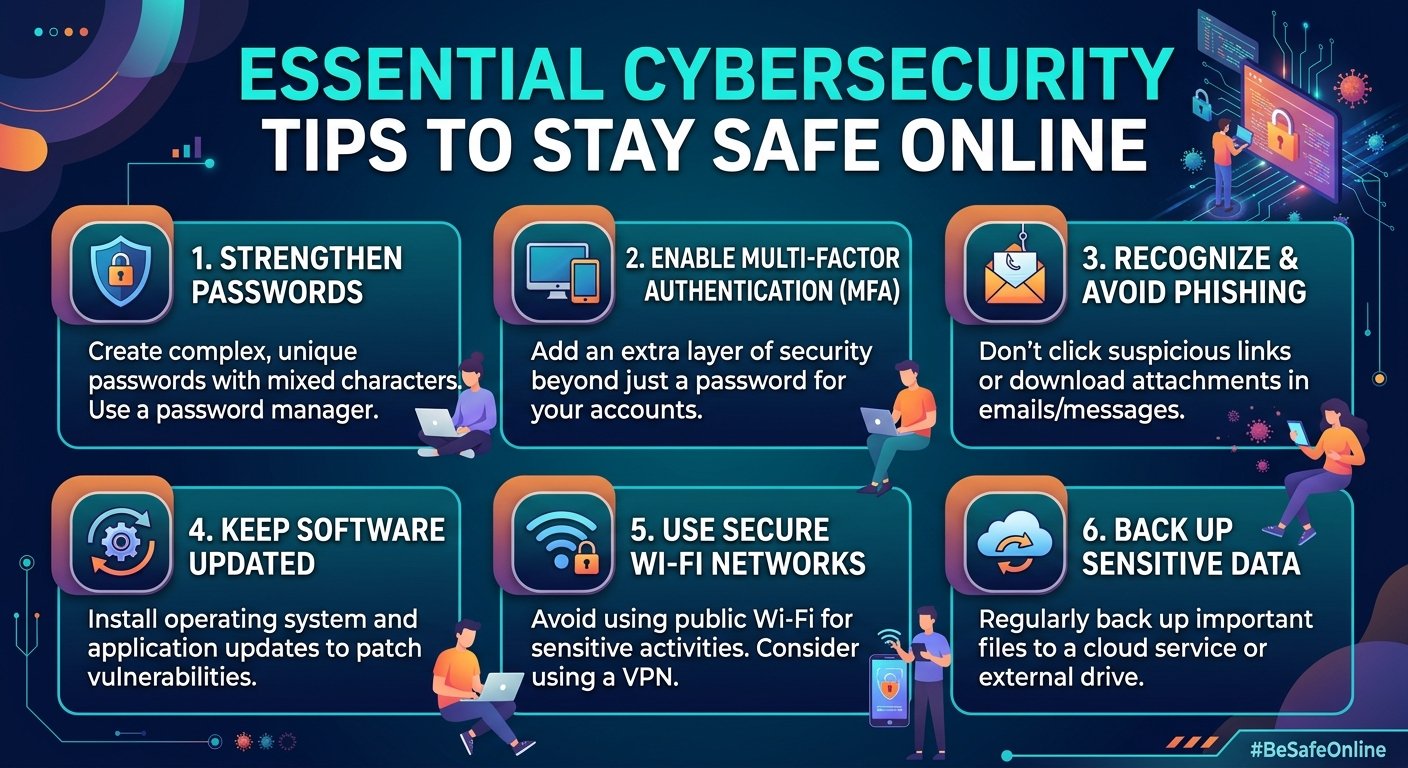 Following simple cybersecurity habits can significantly improve your online protection. Below are ten practical tips to help you stay safe in the digital world.
1. Create Strong and Unique Passwords
Passwords are the first line of defense against unauthorized access to online accounts. Using weak or repeated passwords can make personal accounts easier to compromise.
Create strong passwords using a combination of letters, numbers, and symbols. Avoid using easily guessed information such as birthdays, names, or common words.
It is also important to use a different password for every important account. A trusted password manager can help you create and manage unique passwords securely.
2. Enable Two-Factor Authentication (2FA)
Two-factor authentication adds an extra layer of protection to your online accounts. Instead of relying only on a password, it requires an additional verification step.
For example, you may need to enter a temporary verification code or approve a login through an authentication application.
Enable two-factor authentication whenever it is available, especially for email, social media, and financial accounts.
3. Avoid Suspicious Emails and Links
Phishing is one of the most common online threats. Cybercriminals often send fake emails or messages pretending to represent trusted companies, banks, or organizations.
These messages may encourage users to click suspicious links, share passwords, or provide personal information.
To protect yourself:
-
Avoid opening unexpected attachments.
-
Check the sender’s email address carefully.
-
Do not share sensitive information through suspicious messages.
-
Visit official websites directly instead of clicking unfamiliar links.
-
Be cautious of messages creating unnecessary urgency.
Remember that legitimate organizations generally do not ask you to reveal your password through email or text messages.
4. Keep Your Software and Devices Updated
Software updates are important for maintaining digital security. Developers regularly release updates to fix security weaknesses, improve performance, and protect devices against emerging threats.
Make sure your operating system, web browser, mobile applications, and security software are updated regularly.
Whenever possible, enable automatic updates so that important security improvements are installed without unnecessary delays.
5. Use Secure Wi-Fi Networks
Public Wi-Fi networks available in cafés, airports, hotels, and other public places can create privacy and security risks.
Avoid accessing sensitive accounts or performing important financial activities through unsecured public networks.
For better protection:
-
Use trusted and password-protected Wi-Fi.
-
Avoid connecting to unfamiliar networks.
-
Disable automatic connections to unknown Wi-Fi.
-
Use a reputable VPN when appropriate.
-
Confirm that websites use HTTPS before sharing information.
A secure internet connection helps reduce the chances of unauthorized access to your online activities.
6. Install Reliable Antivirus and Security Software
Security software can help identify and block malicious programs, suspicious downloads, and other digital threats.
Choose reputable security software and keep it updated. Use the built-in security features available on your computer or smartphone.
Regular security scans can also help identify potential problems before they become serious.
7. Protect Your Social Media Accounts
Social media platforms allow people to communicate and share information, but sharing too much personal information can create privacy risks.
Avoid publicly posting sensitive details such as your home address, phone number, passwords, or private documents.
Review your privacy settings regularly and limit who can view your personal information.
Be careful when accepting friend requests or communicating with unfamiliar accounts. Fake profiles are sometimes used to collect personal information or spread harmful links.
8. Back Up Your Important Data
Data backup is an important part of cybersecurity. Unexpected technical problems, accidental deletion, or cyberattacks can result in the loss of important files.
Keep copies of essential documents, photographs, and other valuable information.
You can use secure cloud storage or an external storage device for backups. Make sure your backup accounts and devices are also protected with strong security measures.
9. Download Applications from Trusted Sources
Downloading applications from unknown websites or unofficial platforms can expose your devices to harmful software.
Always use official application stores or trusted websites when downloading programs.
Before installing an application, review its permissions and consider whether it genuinely needs access to your contacts, camera, microphone, or location.
Avoid installing unknown software simply because it promises free services or attractive offers.
10. Learn About the Latest Cybersecurity Threats
Cybersecurity threats continue to evolve as technology advances. Learning about new online scams, phishing techniques, identity theft, and digital privacy risks can help you make safer decisions.
Follow reliable cybersecurity resources and encourage family members, students, and colleagues to develop responsible online habits.
Knowledge is one of the most effective tools for improving digital safety.
Common Cybersecurity Threats You Should Know About
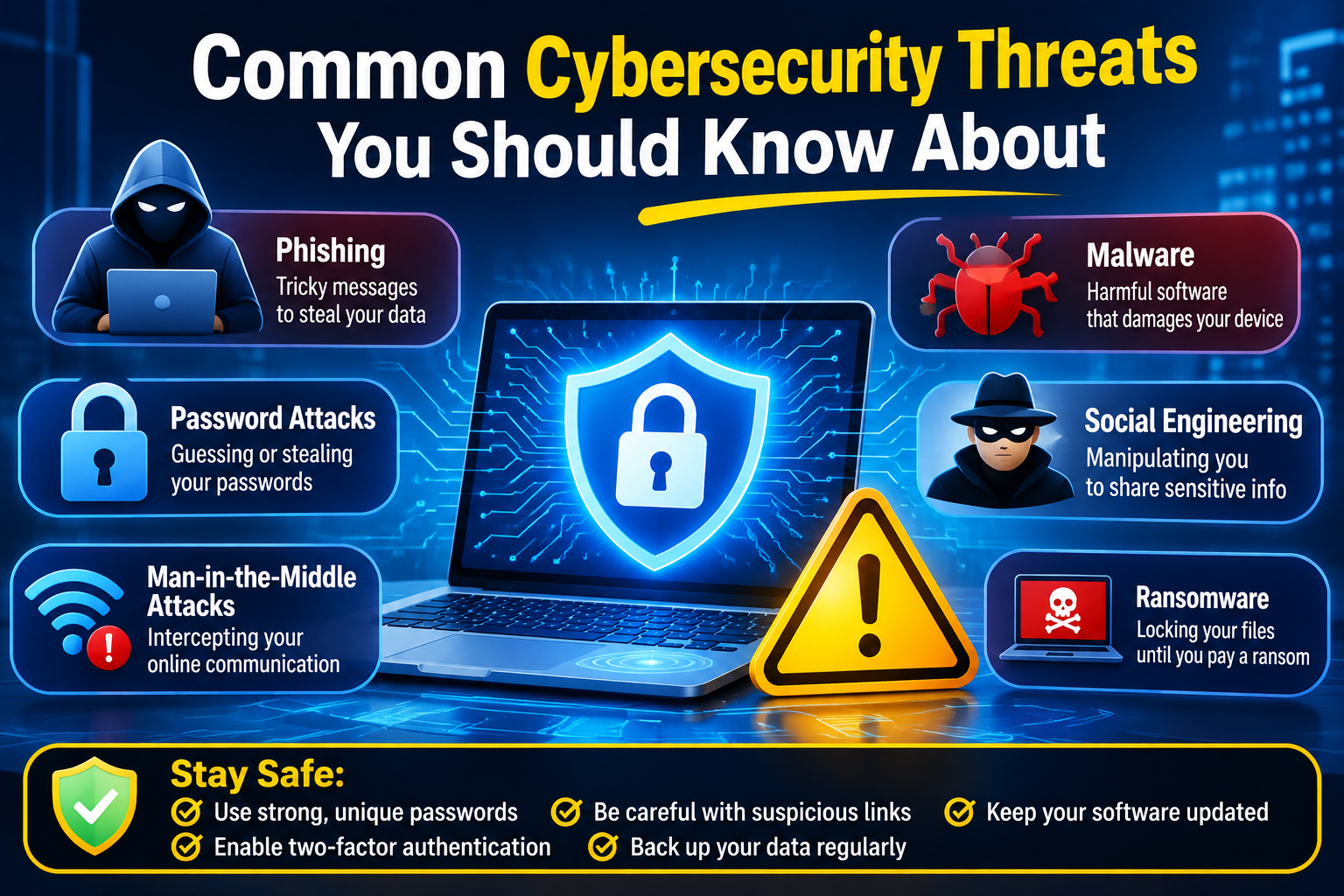
Understanding common cyber threats is essential for protecting personal and professional information.
Some of the most common cybersecurity threats include:
| Cyber Threat | Description |
|---|---|
| Phishing | Fake messages designed to steal personal information. |
| Malware | Harmful software that can damage devices or access information. |
| Ransomware | Malicious software that locks or encrypts data and demands payment. |
| Identity Theft | Unauthorized use of someone’s personal information. |
| Spyware | Software that secretly collects information about users. |
| Data Breaches | Incidents in which private or confidential information is exposed. |
| Social Engineering | Manipulating people into revealing sensitive information. |
Recognizing these threats makes it easier to identify suspicious online activities and respond appropriately.
Cybersecurity Tips for Students and Young Internet Users
Students spend considerable time using the internet for education, research, communication, and entertainment. Therefore, developing good cybersecurity habits at an early age is extremely important.
Here are some useful online safety practices for students:
-
Never share passwords with strangers.
-
Avoid communicating with suspicious online accounts.
-
Do not download files from unknown sources.
-
Keep personal social media accounts private.
-
Ask a trusted adult for help when encountering suspicious online activity.
-
Avoid sharing personal photographs or private information publicly.
-
Use educational websites and trusted digital platforms.
Schools and parents can also support students by teaching them about digital responsibility, online privacy, and internet safety.
The Role of Artificial Intelligence in Cybersecurity
Artificial Intelligence (AI) is transforming the cybersecurity industry. Modern security systems use AI-powered technologies to identify unusual activities, detect suspicious behavior, and respond to potential threats.
AI can analyze large amounts of digital information and help security professionals recognize patterns that may indicate cyberattacks.
Some important applications of AI in cybersecurity include:
-
Detecting suspicious login attempts.
-
Identifying phishing messages.
-
Monitoring unusual network activities.
-
Recognizing potential malware.
-
Improving fraud detection.
-
Supporting faster security responses.
However, artificial intelligence can also be misused by cybercriminals to create convincing scam messages and impersonation attempts. Therefore, users should remain cautious even when digital messages appear professional or realistic.
How Businesses Can Improve Cybersecurity
Cybersecurity is not only important for individuals but also for businesses of every size. Companies store valuable customer information, financial records, employee details, and confidential business documents.
A single security incident can damage a company’s reputation and interrupt its operations.
Businesses can strengthen their cybersecurity by following these practices:
-
Provide regular cybersecurity training to employees.
-
Use strong passwords and multi-factor authentication.
-
Restrict access to confidential business information.
-
Maintain updated software and security systems.
-
Create regular data backups.
-
Develop an incident response plan.
-
Monitor networks for suspicious activities.
-
Use secure communication and file-sharing platforms.
Investing in cybersecurity helps businesses protect their digital assets, maintain customer trust, and support long-term growth.
The Future of Cybersecurity
The future of cybersecurity will continue to evolve as digital technologies become more advanced. Artificial intelligence, cloud computing, smart devices, and connected networks are creating new opportunities as well as new security challenges.
Organizations are increasingly focusing on advanced threat detection, automated security systems, biometric authentication, and improved data protection strategies.
At the same time, individuals will need to become more aware of digital privacy and online security.
In the coming years, cybersecurity education and responsible technology usage will play an increasingly important role in creating a safer digital environment.
Conclusion
Cybersecurity is an essential part of modern digital life. As people increasingly depend on the internet for communication, education, business, and financial activities, protecting personal information has become more important than ever.
By following simple cybersecurity tips such as creating strong passwords, enabling two-factor authentication, avoiding suspicious links, updating software, and protecting personal information, individuals can reduce many common online risks.
Businesses, schools, and families should also encourage cybersecurity awareness and responsible internet usage.
Remember, staying safe online is not a one-time activity; it is an ongoing responsibility. A few smart digital habits today can help protect your information and create a safer online experience tomorrow.