



Feeling stiff after sitting for hours, waking up with tight muscles, or struggling to move comfortably can make everyday activities more difficult. These experiences often encourage people to search for good stretches that improve flexibility and help the body feel more comfortable. A suitable stretching routine can support joint mobility, reduce feelings of muscular tightness, and make ordinary movements easier.
Stretching is not only useful for athletes or people who exercise regularly. Students, office workers, older adults, and beginners may benefit from including comfortable stretching movements in their daily routines. Different stretches target different muscle groups, and learning proper technique helps you avoid unnecessary discomfort. The most effective approach depends on your mobility, physical activities, and personal needs.
This guide explores the benefits of stretching, common stretching techniques, and practical movements for different areas of the body. You will also learn how to stretch safely, avoid common mistakes, and build a manageable flexibility routine. Understanding these basics can help you make stretching a useful part of your everyday movement habits.
What Are Good Stretches and Why Do They Matter?
Good stretches are controlled movements or positions that gently lengthen muscles and move joints through comfortable ranges. They may help maintain or improve flexibility and support easier movement during everyday activities. Effective stretches should match your physical abilities rather than force your body into difficult positions. The goal is comfortable, controlled movement, not achieving an extreme range.
Muscles and joints experience different demands depending on daily activities, exercise habits, and individual physical characteristics. Spending long periods in one position may contribute to temporary feelings of stiffness. Regular movement and appropriate stretching can help maintain comfortable mobility. However, stretching is only one part of physical fitness and does not replace strengthening, aerobic exercise, or normal daily activity.
A useful stretching routine considers which muscle groups need attention and how your body responds to different movements. Someone who spends hours sitting may focus on the hips and upper body. An athlete may choose stretches connected to a particular sport. The best routine is one that feels manageable and supports the movements you regularly perform.
Key Benefits of Regular Stretching
One of the main benefits of stretching is improving flexibility and joint range of motion. Consistent stretching may gradually make certain movements feel easier and less restricted. For example, improved hip flexibility can support comfortable bending and reaching. These changes are often gradual and depend on individual mobility, exercise consistency, and the techniques being used.
Stretching may also provide temporary relief from feelings of muscular tightness. Gentle movements can create a sense of relaxation, particularly after prolonged sitting or periods of inactivity. Some people find stretching useful as part of a calming evening routine. However, stretching does not reliably prevent exercise-related soreness or eliminate every cause of muscle discomfort.
Another potential benefit is increased awareness of how different body parts move. Practicing controlled stretches encourages attention to breathing, position, and comfortable movement limits. This awareness can be valuable during exercise and ordinary physical activities. Stretching works best when combined with strength training and regular movement rather than being treated as a complete fitness program.
Understanding Static and Dynamic Stretching
Static stretching involves moving into a comfortable position and maintaining it for a short period. Common examples include standing quadriceps stretches, seated hamstring stretches, and gentle calf stretches. This approach is frequently used when the goal is improving flexibility. The position should create mild tension without producing sharp pain, tingling, or excessive discomfort.
Dynamic stretching involves controlled movements that take joints through a manageable range of motion. Arm circles, gentle leg swings, and walking movements are common examples. These activities can be useful during warm-ups because they involve active movement. Unlike static stretching, dynamic stretching generally avoids holding the body in one position for an extended period.
Both approaches can be useful, but they serve somewhat different purposes. Dynamic movements often suit preparation for activities requiring coordination and physical effort. Static stretching may be included in separate flexibility sessions or after exercise. The ideal choice depends on your goals, current mobility, and any medical conditions that affect movement.
Neck Stretches for Everyday Comfort
Neck stiffness can develop after extended periods of reading, studying, or using electronic devices. Maintaining the same head position for long periods may contribute to muscular discomfort. Gentle neck movements can help maintain comfortable mobility and reduce feelings of tightness. However, persistent neck pain or symptoms spreading into the arms should be evaluated by a healthcare professional.
One simple movement is the gentle side-neck stretch. Sit upright with your shoulders relaxed and slowly tilt one ear toward the same-side shoulder. Stop when you feel mild tension along the opposite side of your neck. Return to the center before repeating the movement toward the other side, keeping your breathing relaxed throughout.
Avoid pulling your head forcefully or rotating your neck into uncomfortable positions. Small, controlled movements are usually more appropriate than trying to stretch as far as possible. Regular movement breaks may also be helpful during prolonged screen use. If stretching produces dizziness, tingling, headaches, or increasing pain, stop and seek appropriate medical guidance.
Shoulder Stretches to Improve Upper-Body Mobility
The shoulders allow the arms to move in many directions during everyday activities. Reaching overhead, carrying objects, and working at a desk all involve coordinated shoulder movement. Gentle stretches may help maintain comfortable mobility when muscles feel tight. However, shoulder discomfort can have several causes, so not every stretching movement is suitable for every person.
A cross-body shoulder stretch is a common option for improving flexibility around the back of the shoulder. Bring one arm gently across your chest at a comfortable height. Use your opposite hand to support the upper arm and apply light pressure if needed. Maintain the position without forcing the shoulder or allowing sharp discomfort.
Another gentle option involves controlled shoulder rolls or relaxed arm movements. These activities encourage movement without requiring deep stretching positions. Keep your shoulders relaxed and avoid pushing through pain or joint pinching. If you have a recent injury, shoulder instability, or persistent discomfort, consult a physical therapist before beginning unfamiliar upper-body stretches.
Chest Stretches for Comfortable Upper-Body Movement
Chest muscles contribute to movements involving the shoulders and upper arms. They may feel tight after activities involving repeated pushing or prolonged time in certain positions. Gentle chest stretching can help maintain flexibility around the front of the upper body. It may also complement strengthening exercises that support shoulder movement and overall physical function.
A doorway chest stretch is a familiar exercise that requires little equipment. Stand inside a doorway and place your forearm against the frame at a comfortable height. Step forward slightly until you notice a gentle stretch across the front of your chest. Keep the movement small and avoid forcing your shoulder into an uncomfortable position.
The exact arm position can influence which tissues experience the greatest tension. People with shoulder injuries may need a different variation or may need to avoid this exercise temporarily. Breathe normally while holding a comfortable position and release slowly. Chest stretching can be useful, but it does not replace strengthening or address every cause of upper-body discomfort.
Upper-Back Stretches for Better Mobility
The upper back, also called the thoracic region, supports trunk movement and contributes to shoulder function. Prolonged sitting may make this area feel stiff, especially when movement breaks are limited. Gentle upper-back mobility exercises can encourage comfortable rotation and extension. Maintaining movement in this region may support everyday activities that involve turning, reaching, and changing positions.
A seated upper-back rotation is a simple movement that can be performed without special equipment. Sit upright in a stable chair with both feet resting comfortably on the floor. Slowly turn your upper body toward one side while keeping the movement gentle. Return to the center before rotating in the opposite direction without forcing the position.
Another option is a gentle cat-cow movement performed on hands and knees when comfortable. Slowly alternate between rounding and extending your back within a manageable range. Avoid exaggerating the movement or holding your breath. People with spinal injuries, significant pain, or medical movement restrictions should seek professional advice before attempting unfamiliar exercises.
Lower-Back Stretches for Gentle Flexibility
Lower-back discomfort is common, but it can develop for many different reasons. Muscular tightness, reduced movement, and certain physical demands may contribute to temporary stiffness. Gentle stretching can help some people maintain comfortable movement. However, not every type of lower-back pain responds well to the same exercises, making individual tolerance important.
A single knee-to-chest stretch is one option for people who find spinal flexion comfortable. Lie on your back with your knees bent and feet resting on the floor. Slowly bring one knee toward your chest, supporting the leg with your hands. Stop at a comfortable position and return the leg gently before changing sides.
Avoid pulling the knee forcefully or attempting to stretch through increasing pain. Some people with back conditions feel better with different movement directions and may not tolerate this stretch. If you experience pain traveling down the leg, new numbness, or significant weakness, seek medical advice. Comfortable movement should guide your routine rather than a fixed stretching target.
Hip Flexor Stretches for People Who Sit Often
The hip flexors are muscles that help lift the thigh toward the torso. They participate in walking, climbing stairs, and many other daily movements. Some people experience a sensation of tightness around the front of the hips after prolonged sitting. Gentle hip flexor stretching may improve flexibility when these muscles feel restricted.
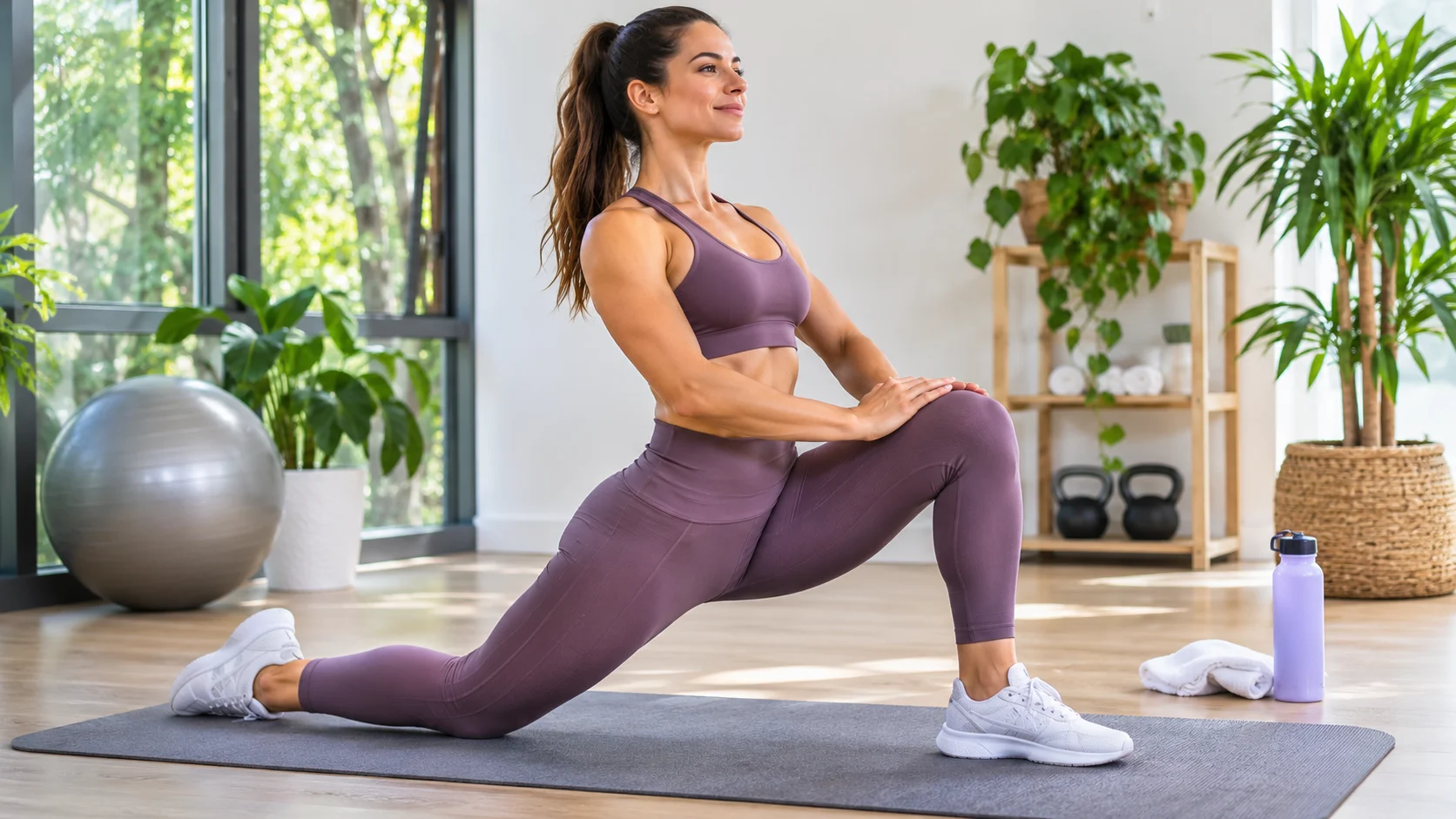
A half-kneeling hip flexor stretch is a common option for people comfortable kneeling. Position one knee on a padded surface and place the opposite foot in front. Gently shift your pelvis forward while keeping your torso upright and avoiding excessive lower-back arching. You should feel mild tension near the front of the hip on the kneeling side.
The stretch should remain comfortable and controlled rather than becoming a deep lunge. Use additional support if balancing is difficult, or choose a standing variation when kneeling is uncomfortable. Avoid forcing the hips beyond their natural range. Combining hip mobility with appropriate strengthening can support more balanced movement during ordinary physical activities.
Hamstring Stretches for Flexible Legs
The hamstrings are located at the back of the thighs and contribute to hip and knee movement. These muscles are active during walking, running, bending, and other physical activities. Reduced hamstring flexibility may make certain positions feel restricted. Gentle stretching can help improve tolerance to these movements without requiring extreme flexibility.
A lying hamstring stretch can be performed using a towel or stretching strap. Lie on your back and lift one leg toward the ceiling while supporting it with the strap. Keep the knee slightly bent if necessary and raise the leg only until you feel comfortable tension. The opposite leg can remain bent to support a relaxed position.
Avoid pulling the leg aggressively or locking the knee into an uncomfortable position. Stretching should produce mild muscular tension rather than sharp pain or tingling. If you have a recent hamstring injury, seek guidance before returning to stretching. Gradual mobility work and suitable strengthening can complement each other when maintaining healthy leg function.
Quadriceps Stretches for the Front of the Thighs
The quadriceps muscles are located at the front of the thighs and play an important role in straightening the knees. They contribute to walking, climbing stairs, cycling, and standing from seated positions. Stretching these muscles can help maintain knee and hip mobility. However, individuals with injuries may require modified movements.
A standing quadriceps stretch is a familiar exercise for people with comfortable balance and knee movement. Stand beside a stable support and gently bend one knee behind your body. Hold your ankle or use a suitable strap to support the position. Keep your knees reasonably close together without pulling the foot forcefully.
If standing balance is difficult, a side-lying variation may be more comfortable. Avoid arching your back excessively or forcing the knee into deep bending. The stretch should remain manageable without placing painful pressure on the joint. People recovering from knee injuries or muscle strains should follow individualized rehabilitation advice before stretching.
Calf and Ankle Stretches for Walking Mobility
The calf muscles help control ankle movement during walking, running, and climbing stairs. Comfortable ankle mobility is important for many daily movements, including squatting and stepping. Reduced flexibility around the calf may make certain activities feel restricted. Gentle stretching can support ankle range of motion when performed with appropriate technique.
A standing calf stretch can be performed using a wall for support. Place one foot behind the other and keep the back heel comfortably on the floor. Bend the front knee slightly while leaning forward until you feel mild tension in the back calf. Maintain a controlled position without allowing the rear foot to twist.
Changing the position of the back knee can influence which calf muscles receive greater emphasis. A slightly bent knee may help target deeper calf structures, while a straighter knee emphasizes others. Avoid bouncing or pushing into sharp ankle discomfort. People with recent calf injuries or Achilles tendon problems should seek suitable guidance before stretching.
Full-Body Stretches for a Simple Daily Routine
A full-body stretching routine does not need to involve complicated movements or specialized equipment. Choosing a few comfortable stretches for major muscle groups can provide a manageable starting point. Many people benefit from including upper-body, hip, and leg movements. The goal is to maintain regular mobility rather than complete the longest possible stretching session.
You might begin with gentle shoulder rolls, upper-back rotations, and controlled neck movements. Then move to comfortable hip, hamstring, quadriceps, and calf stretches. Select positions that match your current mobility and avoid exercises that aggravate existing symptoms. For static stretches, many healthy adults use gentle holds of approximately 10 to 30 seconds.
A practical routine can be adjusted according to the time available and how your body feels. Some days may require only a few movements after prolonged sitting. Other days might include a longer flexibility session following light activity. Regular practice can improve familiarity with the movements and help you identify which stretches feel most useful.
Best Time to Stretch During the Day
Stretching can fit into different parts of your daily routine depending on personal preference and activity demands. Some people enjoy gentle movement in the morning after waking up. Others find flexibility exercises helpful after physical activity or extended sitting. There is no single time of day that produces the best results for everyone.
Before demanding exercise, dynamic movements may be more suitable than prolonged static stretching. Walking, controlled arm movements, and gentle leg swings can help prepare the body for activity. Static stretching can be included separately or after a workout when appropriate. A brief period of light movement beforehand may make stretching more comfortable.
Evening stretching may also provide an opportunity to relax after a busy day. Gentle movements performed without rushing can encourage awareness of breathing and muscle tension. However, stretching should not interfere with sleep or become another demanding workout. Choosing a convenient time can make it easier to maintain a consistent routine.
Common Stretching Mistakes to Avoid
One common mistake is assuming that a deeper stretch always produces better results. Forcing a joint or muscle beyond a comfortable range can create unnecessary discomfort. Effective stretching generally involves gentle tension and controlled positioning. Pain is not a reliable sign that a stretch is working, and increasing pain should prompt you to stop.
Another mistake is using bouncing movements during static stretching without proper technique or training. Rapid movements can make it harder to control the amount of tension placed on a muscle. Holding your breath or allowing poor positioning can also reduce comfort. Slow movement and relaxed breathing are useful habits for people learning basic stretching techniques.
Stretching cold muscles aggressively is another avoidable problem. A short period of light movement may help prepare the body for flexibility work. People sometimes also overlook the importance of strengthening exercises when addressing mobility limitations. Building strength and control through comfortable movement is often just as important as improving flexibility.
How to Improve Flexibility and Mobility Safely
Flexibility describes how far muscles and surrounding tissues allow a joint to move, while mobility includes the ability to control movement through that range. Both are useful for everyday physical activities. Improving one does not automatically develop the other. A balanced routine may include stretches alongside movements that build strength and coordination.
Progress gradually by choosing exercises that match your current abilities. Avoid comparing your range of motion with other people because anatomy and physical needs differ. Consistency is usually more valuable than forcing dramatic changes during a single session. Notice whether ordinary activities become easier rather than focusing only on how far you can stretch.
Some people have naturally greater joint flexibility, while others experience limitations because of injury or medical conditions. People with joint hypermobility may benefit more from stability and control than from additional stretching. If you experience persistent pain, instability, or unusual symptoms, consult a qualified professional. Individualized advice can help identify safe and useful mobility goals.
Conclusion
Good stretches can help maintain flexibility, improve comfortable joint movement, and support everyday physical activities. From gentle neck movements to hip, hamstring, and calf stretches, different exercises address different areas of the body. Choosing movements that suit your abilities is more important than attempting complicated positions or pushing beyond comfortable limits.
A useful stretching routine combines proper technique, relaxed breathing, and gradual progression. Dynamic stretching may be helpful before physical activity, while static stretches can support dedicated flexibility practice. Including strength training and regular movement creates a more balanced approach to physical fitness. Consistency and comfort should guide your routine.
Whether you spend long hours sitting or enjoy regular exercise, stretching can become a practical part of your daily habits. Start with a few manageable movements and adjust them as your needs change. If stretching causes persistent discomfort or you have an existing injury, seek professional guidance to maintain safe and comfortable movement.
Frequently Asked Questions
What Are the Best Stretches to Do Every Day?
Good daily options include gentle neck stretches, shoulder movements, hip flexor stretches, hamstring stretches, and calf stretches. Choose movements that feel comfortable and address your specific mobility needs.
How Long Should You Hold a Stretch?
Many healthy adults can hold a comfortable static stretch for approximately 10 to 30 seconds. The appropriate duration depends on the movement, individual flexibility, and any existing medical conditions.
Is It Better to Stretch in the Morning or at Night?
Both times can be suitable. Morning stretching may help you begin moving comfortably, while evening stretching can become part of a relaxing routine. Consistency matters more than the time.
Can Stretching Help With Muscle Stiffness?
Gentle stretching may temporarily reduce feelings of muscular tightness and improve comfortable range of motion. However, persistent stiffness or pain may have underlying causes that require professional evaluation.
Should You Stretch Before or After Exercise?
Dynamic stretching is commonly used during warm-ups before exercise. Static stretching can be performed after activity or during separate flexibility sessions, depending on your goals and physical needs.