




Introduction
Maintaining a healthy lifestyle is one of the most important steps toward achieving a happier, more energetic, and fulfilling life. In today’s busy world, people often struggle to balance their professional responsibilities, personal commitments, physical health, and mental well-being. However, adopting simple and consistent habits can make a significant difference in overall health.
A healthy lifestyle is not just about exercising regularly or following a strict diet. It involves maintaining a balance between fitness, nutrition, mental health, quality sleep, and daily wellness habits. By making better choices every day, individuals can improve their physical fitness, strengthen their bodies, support emotional well-being, and reduce the risk of various health problems.
This ultimate guide to a healthy lifestyle explores practical ways to improve fitness, develop healthy eating habits, and achieve long-term wellness.
1. Understanding the Importance of a Healthy Lifestyle
A healthy lifestyle means making everyday choices that support physical, mental, and emotional well-being. It does not require dramatic changes or complicated routines. Instead, small improvements practiced consistently can lead to meaningful results.
Some major benefits of maintaining a healthy lifestyle include:
-
Improved physical strength and energy levels.
-
Better heart and cardiovascular health.
-
Stronger muscles and bones.
-
Improved concentration and mental clarity.
-
Better sleep quality.
-
Reduced risk of chronic diseases.
-
Improved mood and emotional balance.
Developing healthy habits also helps people become more productive and confident in their daily lives.
2. Fitness: The Foundation of Physical Health
Physical activity plays an essential role in maintaining a healthy body. Regular exercise strengthens muscles, improves flexibility, supports heart health, and helps maintain overall physical fitness.
You do not necessarily need an expensive gym membership to stay active. Walking, cycling, dancing, swimming, and home workouts are all effective ways to include physical activity in your daily routine.
Best Exercises for a Healthy Lifestyle
Consider including these activities in your fitness routine:
Walking: Walking is a simple and accessible exercise that supports cardiovascular health and improves general fitness.
Strength Training: Strength exercises help develop muscle strength, support bone health, and improve everyday physical performance.
Yoga: Yoga combines movement, breathing, and relaxation techniques to improve flexibility and encourage mental well-being.
Cycling: Cycling is an enjoyable physical activity that improves endurance and supports heart health.
Stretching: Regular stretching helps maintain flexibility and supports comfortable movement.
How to Build a Consistent Fitness Routine
Consistency is more important than intensity when developing a sustainable exercise routine. Start with manageable activities and gradually increase your activity level.
Helpful fitness tips include:
-
Choose activities you genuinely enjoy.
-
Set realistic and achievable goals.
-
Include movement in your daily routine.
-
Allow sufficient time for rest and recovery.
-
Maintain consistency rather than focusing on perfection.
For general health, adults should aim for at least 150 minutes of moderate-intensity physical activity each week, alongside muscle-strengthening activities on two or more days.
3. Nutrition: Eat Well to Feel Better
Nutrition is another essential component of a healthy lifestyle. The food we eat provides the energy and nutrients our bodies need to function properly.
A balanced diet supports growth, immunity, brain function, and overall health. Instead of following extreme diets, focus on eating a variety of nutritious foods in appropriate portions.
Essential Nutrients for a Balanced Diet
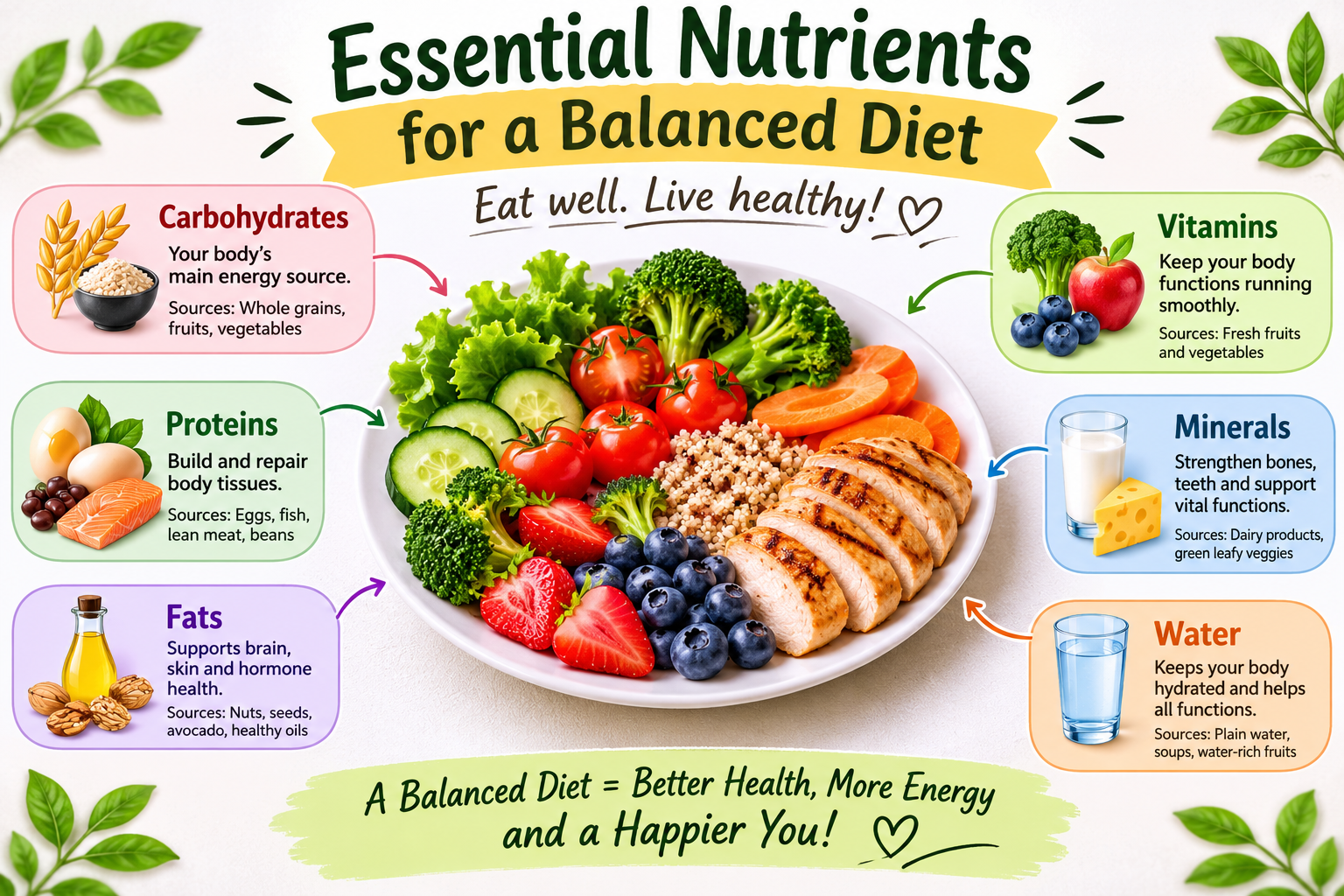
A healthy eating plan should include the following nutrients:
Protein: Protein supports muscle development, tissue repair, and normal body functions. Good sources include eggs, fish, chicken, beans, lentils, and dairy products.
Carbohydrates: Carbohydrates provide energy for everyday activities. Whole grains, oats, fruits, and vegetables are nutritious options.
Healthy Fats: Healthy fats support brain function and help the body absorb certain vitamins. Sources include nuts, seeds, olive oil, and avocados.
Vitamins and Minerals: Fruits and vegetables provide essential vitamins, minerals, and antioxidants that support different body functions.
Fiber: Fiber supports digestive health and helps maintain healthy blood sugar and cholesterol levels.
Healthy Eating Habits to Follow
Developing better eating habits does not have to be complicated. You can begin with a few simple changes:
-
Include fruits and vegetables in your daily meals.
-
Choose whole grains whenever possible.
-
Drink enough water throughout the day.
-
Include protein-rich foods in balanced meals.
-
Limit excessive added sugar and highly processed foods.
-
Maintain regular and balanced meal patterns.
Remember, healthy nutrition is about balance, variety, and consistency rather than unnecessary food restrictions.
4. Mental Wellness: Take Care of Your Mind
Physical health and mental wellness are closely connected. A healthy lifestyle should support emotional balance, stress management, and psychological well-being.
Modern life can bring academic, professional, and personal pressures. Without proper stress management, these challenges may affect sleep, concentration, mood, and overall health.
Effective Ways to Improve Mental Wellness
Practice Mindfulness: Spend a few minutes focusing on the present moment. Mindfulness can help reduce everyday stress and improve self-awareness.
Stay Connected: Maintain positive relationships with family members, friends, and supportive people.
Enjoy Your Hobbies: Reading, gardening, painting, listening to music, and other enjoyable activities can provide relaxation.
Spend Time Outdoors: Fresh air and time in natural surroundings can support mood and emotional well-being.
Maintain a Positive Routine: Organizing your daily activities can help reduce unnecessary stress and create a sense of balance.
Taking care of your mental health is just as important as looking after your physical health.
5. The Importance of Quality Sleep
Sleep is an essential part of overall wellness. During sleep, the body performs important processes that support physical recovery, brain function, memory, and emotional regulation.
Poor sleep habits can affect concentration, mood, energy, and general health.
Tips for Better Sleep
-
Maintain a consistent sleep schedule.
-
Create a comfortable and peaceful sleeping environment.
-
Avoid heavy meals close to bedtime.
-
Reduce screen exposure before sleeping.
-
Avoid caffeine late in the day.
-
Develop a relaxing nighttime routine.
Most adults need around seven to nine hours of sleep each night, although individual needs may vary.
6. Hydration: Keep Your Body Properly Hydrated
Water is essential for many important body functions, including temperature regulation, digestion, circulation, and nutrient transportation.
Not drinking enough water can contribute to tiredness, headaches, and difficulty concentrating.
To maintain proper hydration:
-
Drink water regularly throughout the day.
-
Carry a reusable water bottle.
-
Include water-rich foods such as cucumbers, oranges, and watermelon.
-
Drink additional fluids when exercising or spending time in hot weather.
Your hydration needs may vary depending on your activity level, climate, and overall health.
7. Healthy Daily Habits for Long-Term Wellness
A healthy lifestyle is built through everyday decisions. Rather than trying to change everything at once, focus on developing habits that you can maintain over time.
Here are some simple habits worth adopting:
| Daily Habit | Health Benefit |
|---|---|
| Morning physical activity | Supports energy and fitness |
| Balanced meals | Provides essential nutrients |
| Drinking enough water | Supports normal body functions |
| Regular exercise | Improves physical health |
| Quality sleep | Supports recovery and concentration |
| Mindfulness | Encourages emotional balance |
| Spending time outdoors | Supports overall well-being |
Small improvements can gradually create a healthier and more balanced lifestyle.
8. Common Healthy Lifestyle Mistakes to Avoid
While trying to improve their health, many people unknowingly develop habits that make their wellness journey more difficult.
Some common mistakes include:
-
Following extreme or restrictive diets.
-
Exercising excessively without adequate recovery.
-
Ignoring mental health and stress.
-
Skipping meals regularly.
-
Not drinking enough water.
-
Sacrificing sleep for work or entertainment.
-
Expecting immediate results from lifestyle changes.
The best approach is to focus on sustainable habits that support your overall health rather than pursuing quick results.
9. How to Stay Motivated on Your Wellness Journey
Building a healthy lifestyle requires patience, commitment, and realistic expectations. Some days may be more challenging than others, but consistency helps create lasting improvements.
Here are a few ways to stay motivated:
-
Set small and realistic health goals.
-
Track your progress without becoming overly focused on numbers.
-
Celebrate positive changes in your habits.
-
Find a fitness activity that you enjoy.
-
Build a supportive environment.
-
Remember that occasional setbacks are normal.
Your wellness journey should be enjoyable, flexible, and suitable for your individual needs.
Conclusion
A healthy lifestyle is a lifelong commitment to taking care of your body and mind. Fitness, balanced nutrition, mental wellness, proper hydration, and quality sleep all play important roles in achieving overall well-being.
You do not need to make major changes overnight. Start with simple steps, such as walking regularly, eating balanced meals, drinking enough water, and maintaining a consistent sleep schedule.
Remember, a healthy lifestyle is not about perfection; it is about making better choices consistently. Every positive habit you develop today can contribute to a healthier, happier, and more fulfilling tomorrow.